If you run a trucking business in Florida, 2026 brings changes you cannot afford to ignore. Both federal and state regulators have updated key rules. These cover everything from CDL requirements to weight limits to fuel tax reporting. Together, the Federal Motor Carrier Safety Administration (FMCSA) and the Florida Department of Transportation (FDOT) are tightening enforcement standards across the board.
Missing a compliance update does not just mean a fine. It can mean losing your operating authority entirely. Whether you are an owner-operator, fleet manager, or just starting a trucking company, this is your complete Florida trucking compliance reference for 2026.
Overview of Updated Florida Trucking Laws 2026
Key Regulatory Updates Every Carrier Must Know
Florida trucking laws 2026 reflect a push toward stricter enforcement and better road safety. Here are the top updates:
- ELD compliance is now more strictly audited at roadside checks
- FMCSA Safety Measurement System (SMS) scoring has been refined — poor scores trigger faster audits
- Entry-Level Driver Training (ELDT) requirements are now fully enforced for all new CDL applicants
- Oversize/overweight permit processing has moved further online through the FDOT portal
- HazMat rules have been tightened for Florida intrastate carriers
Impact on Owner-Operators, Fleets, and New Carriers
Carrier Type | Key Impact in 2026 |
Owner-Operators | ELDT compliance, ELD use, and IFTA filing |
Small Fleets | Updated SMS scoring, annual inspections |
New Carriers | Full ELDT requirement, authority setup, and USDOT registration |
Out-of-State Carriers | Florida permit rules, IRP compliance |
Understanding whether you fall under interstate or intrastate trucking authority matters because the compliance requirements are different for each.
Federal vs. State Rule Changes in Florida for 2026
Federal FMCSA rules apply to all carriers crossing state lines. Florida-only rules apply to intrastate operations. In many cases, Florida has adopted federal standards even for intrastate carriers. Always check both sets of rules.
Florida CDL Requirements 2026
New Eligibility Requirements & CDL Classes
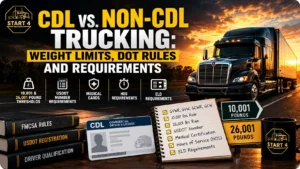
To drive a commercial vehicle in Florida in 2026, you need the correct CDL class:
- Class A: Combination vehicles over 26,001 lbs
- Class B: Single vehicles over 26,001 lbs
- Class C: Vehicles carrying hazardous materials or 16+ passengers
No major class restructuring happened in 2026, but endorsement requirements (tanker, HazMat, doubles/triples) are being more strictly verified during licensing renewals.
Medical Card, Drug Testing & Clearinghouse Updates
All CDL holders must maintain a valid DOT Medical Certificate. In 2026, FMCSA continues enforcing full integration with the Drug and Alcohol Clearinghouse. Carriers must:
- Query the Clearinghouse before hiring any new CDL driver
- Run annual queries on existing drivers
- Report any violations immediately
Failure to comply results in driver disqualification and carrier penalties.
Training Requirements Under FMCSA ELDT Rules
The Entry-Level Driver Training (ELDT) rule in effect since February 2022, is now fully enforced with zero grace period. Any driver applying for a new CDL, upgrading a CDL class, or adding a HazMat endorsement must complete ELDT through an FMCSA-registered provider. This applies to Florida carriers without exception.
Florida Trucking Permit Requirements 2026
Intrastate Operating Authority in Florida
Florida intrastate carriers (operating only within Florida) must register with FDOT. You do not need an MC number for intrastate-only operations, but you may still need a USDOT number depending on vehicle weight and cargo type. More on that below.
Interstate Authority & FMCSA Rules for Florida Carriers
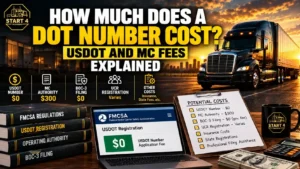
If you cross state lines, you need both a USDOT number and an MC number (operating authority). Learn how to get your Florida DOT number and understand the difference between a DOT number and an MC number before you apply.
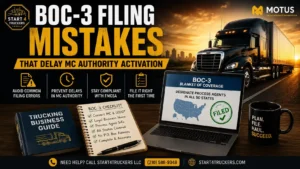
You will also need to file a BOC-3 process agent designation as part of activating your authority.
Oversize / Overweight Permit Process (Step-by-Step)
Getting an oversize or overweight permit in Florida involves these steps:
- Determine the dimensions and weight of your load
- Identify the route using the FDOT permit routing system
- Apply through the Florida Permits Online (OPOT) portal
- Pay the applicable permit fee
- Receive your permit, digital or printed, depending on load type
- Follow all routing, time, and escort vehicle requirements
Single-trip permits are issued per move. Annual permits are available for regularly hauling oversized loads on approved routes.
Special Hauling Permits for Construction, Logs, and Dump Trucks
Florida offers special permit categories for:
- Logging trucks under specific dimension exemptions
- Dump trucks regulated by county road rules
- Construction equipment may require a pilot car escort and night travel restrictions
Always verify county-level rules before moving special loads.
Florida Truck Weight Limits & Axle Rules (Updated 2026)
Florida Legal Weight Limits (GVWR & Axle Breakdown)
Florida follows federal weight limits on interstate highways, with some state-specific allowances on state roads.
Configuration | Maximum Weight |
Single Axle | 20,000 lbs |
Tandem Axle | 34,000 lbs |
Gross Vehicle Weight (GVW) | 80,000 lbs |
Florida Turnpike (with permit) | Up to 88,000 lbs |
Florida also allows a 6% weight tolerance on certain state highways for vehicles with six or more axles. This is a Florida-specific rule not found in most other states.
Weight Enforcement by Florida Highway Patrol
The Florida Highway Patrol (FHP) and Commercial Vehicle Enforcement (CVE) officers operate weigh stations and conduct mobile enforcement statewide. If your truck is flagged:
- You may be placed out of service immediately
- Fines are assessed per pound over the limit
- Repeated violations affect your carrier safety rating
Bridge Formula, Load Distribution & Weight Tolerance Rules
The Federal Bridge Formula applies to all interstate highways in Florida. This formula limits the weight between any two axle groups based on the distance between them. Improper load distribution is one of the most common violations. Always verify axle spacing and distribute weight evenly before departure.
Florida Oversized and Overweight Truck Rules (2026 Updates)
Maximum Dimensions Allowed Without Permit
Dimension | Maximum (No Permit Needed) |
Width | 8 feet 6 inches |
Height | 13 feet 6 inches |
Length (single vehicle) | 40 feet |
Length (combination) | 65 feet |
Anything over these limits requires a valid oversize load permit from FDOT before travel.
Escort Vehicle Requirements in Florida
Escort (pilot car) vehicles are required when:
- Width exceeds 12 feet one front escort required
- Width exceeds 14 feet 6 inches front AND rear escorts required
- Height exceeds 15 feet, height pole vehicle required
Escort drivers must hold a valid Florida escort vehicle operator certification.
Weekend, Holiday & Night Travel Restrictions
Oversized loads in Florida cannot travel:
- From sunset to sunrise (unless specifically permitted)
- On Saturdays or Sundays without a special weekend permit
- On federal holidays
- During peak traffic hours in urban areas like Miami-Dade and Broward County
Hours-of-Service (HOS) and ELD Rules for Florida Truckers
Florida fully adopts federal Hours-of-Service (HOS) rules from the FMCSA. There are no Florida-specific HOS exemptions beyond what federal rules allow.
Key HOS limits for 2026:
- 11-hour driving limit after 10 consecutive hours off duty
- 14-hour on-duty window within which driving must occur
- 60/70-hour limit over 7 or 8 consecutive days
- A 30-minute break is required after 8 hours of driving
Who Must Use ELDs in 2026
All carriers required to maintain Records of Duty Status (RODS) must use a registered Electronic Logging Device (ELD). This includes most CDL drivers operating in interstate commerce. Limited exemptions apply to:
- Drivers using paper logs for no more than 8 days in 30 days
- Driveaway-towaway operations
- Vehicles manufactured before model year 2000
Short-Haul Exemptions for Florida Drivers
Florida drivers on short-haul routes may qualify for the federal short-haul exemption if they:
- Return to the same work reporting location daily
- Stay within a 150 air-mile radius
- Do not exceed 14 hours on duty
Short-haul drivers are exempt from ELD requirements and 30-minute break rules.
Logbook Violations & Fines to Avoid
HOS violations carry serious consequences:
Violation | Consequence |
False log entry | Up to $16,000 fine per violation |
Missing RODS | Out-of-service order |
No ELD | Immediate out-of-service |
HOS exceeded | Driver placed out of service |
Florida Safety, Inspection & Enforcement Guidelines
Annual DOT Inspection Requirements (State & Federal)
All commercial vehicles operating in Florida must pass a CVSA (Commercial Vehicle Safety Alliance) annual inspection. The inspection covers:
- Brakes and brake systems
- Tires and wheels
- Lights and reflectors
- Steering and suspension
- Fuel systems
- Cargo securement
Vehicles that pass display a CVSA inspection decal valid for 12 months.
Vehicle Safety Inspections & Roadside Checks
The Florida Highway Patrol conducts Level I through Level VI roadside inspections. Level I is the most comprehensive, covering both the driver and vehicle. During any inspection, have these documents ready:
- Valid CDL
- Medical certificate
- Current registration
- Insurance documents
- ELD device (if required)
- Permit copies (if hauling oversized loads)
Hazardous Materials (HazMat) Requirements for Florida
Carriers transporting hazardous materials must comply with 49 CFR Parts 171–180 (federal HazMat regulations). In Florida, this means:
- Proper placarding of the vehicle
- Valid HazMat endorsement on the CDL
- Current HazMat registration with FMCSA (for certain quantities)
- Emergency response information carried in the cab
Florida Registration Requirements (IRP 2026 Updates)
IRP Registration Rules for Florida-Based Carriers
The International Registration Plan (IRP) applies to carriers operating in two or more IRP member jurisdictions with vehicles over 26,000 lbs GVWR (or three or more axles). Florida-based carriers must register through FDOT’s IRP office.
Learn the full process in our IRP apportioned plates guide.
Florida Apportionment Fees & Documentation Needed
To register under IRP in Florida, you will need:
- Vehicle title or lease agreement
- Proof of insurance
- Mileage records for each jurisdiction traveled
- USDOT number
- Payment for apportioned registration fees (based on mileage per state)
When Out-of-State Trucks Must Register in Florida
Out-of-state carriers with vehicles based in Florida or operating primarily within Florida must register their vehicles here. Temporary trip permits are available for short-term operations.
IFTA Fuel Tax Reporting for Florida Truckers
What Florida Carriers Must Report Quarterly
The International Fuel Tax Agreement (IFTA) requires carriers to report fuel purchased and miles traveled in each member jurisdiction. Reports are filed quarterly with FDOT as the base jurisdiction.
Get a full breakdown of IFTA fuel tax rules before filing your first return.
Fuel Receipts, Mileage, and Recordkeeping Requirements
IFTA recordkeeping rules require you to keep:
- Fuel purchase receipts (showing date, location, gallons, and vehicle ID)
- Mileage logs per jurisdiction (odometer or GPS-based)
- Records must be retained for 4 years
Penalties for Late Filing or Incorrect IFTA Reporting
Violation | Penalty |
Late filing | $50 or 10% of net tax due (whichever is greater) |
Failure to file | License revocation |
Audit discrepancy | Back taxes + interest + penalty |
Stay on top of quarterly deadlines to avoid unnecessary costs.
Florida Intrastate vs. Interstate Trucking Regulations
Florida-Specific Rules for Intrastate Carriers
Florida intrastate carriers are subject to Florida Statute Chapter 316 and FDOT regulations. These largely mirror federal rules but are enforced by state agencies.
Federal Requirements for Interstate Operators
Interstate carriers must comply with all FMCSA regulations, including ELD use, HOS rules, drug and alcohol testing, and SMS scoring. Visit the FMCSA website for the full regulatory text.
Do Intrastate Carriers Need a USDOT Number in 2026?
Yes, in most cases. Florida requires a USDOT number for intrastate carriers that operate vehicles with a GVWR over 26,000 lbs, transport hazardous materials, or carry more than 8 passengers for compensation. Use our US DOT number lookup tool to check existing registrations.
County-Specific Florida Trucking Rules
Miami-Dade Truck Routing & Restrictions
Miami-Dade enforces strict truck routing on local roads. Many residential streets are off-limits to commercial vehicles. Use FDOT-approved freight corridors and always check local ordinances before routing through the county.
Orlando/Orange County Commercial Vehicle Limits
Orange County restricts overweight vehicles on certain county roads. Posted weight limits on bridges must be observed. Violations result in county fines separate from state penalties.
Jacksonville & Tampa Freight Corridor Rules
Both Jacksonville and Tampa have designated freight corridors for heavy commercial vehicles. The Jacksonville port area has specific routing for container traffic. Tampa enforces time-of-day restrictions near the port and downtown zones.
Florida Turnpike & Highway Restrictions by FDOT
The Florida Turnpike allows oversized loads with proper permits. However, certain structures on the Turnpike have height restrictions below the standard 13’6″. Always verify clearances through the official DOT rules portal before routing oversize loads on any Florida toll road.
2026 FMCSA Rules Affecting Florida Trucking Companies
Updated Safety Measurement System (SMS) Rules
The FMCSA’s Safety Measurement System scores carriers on seven BASIC categories: Unsafe Driving, HOS Compliance, Driver Fitness, Controlled Substances/Alcohol, Vehicle Maintenance, Hazardous Materials, and Crash Indicator. In 2026, thresholds for intervention have been tightened. Carriers near alert thresholds are more likely to receive compliance reviews.
Changes in Carrier Safety Ratings & Audits
FMCSA conducts Compliance Reviews (CR) and Focused Investigations (FI) based on SMS data. A poor safety rating (“Conditional” or “Unsatisfactory”) can result in loss of operating authority. New carriers in their first 18 months are subject to a New Entrant Safety Audit.
New CDL and Entry-Level Driver Training Requirements
ELDT is now the standard. All new CDL applicants must complete theory and behind-the-wheel training with a registered Training Provider listed in the FMCSA’s Training Provider Registry (TPR). Self-certification is no longer accepted for these applicants.
Penalties for Violating Florida Trucking Regulations (2026)
Weight Violations & Fines in Florida
Florida calculates overweight fines per pound over the legal limit:
Excess Weight | Fine Per Pound Over |
1 – 2,000 lbs over | $0.05 per lb |
2,001 – 3,000 lbs over | $0.10 per lb |
Over 3,000 lbs | $0.15 per lb |
Fines can escalate quickly on multi-axle violations. A vehicle 5,000 lbs over the limit could face a fine of $500 or more plus court costs.
CDL Suspension & Driver Penalties
Drivers can face CDL suspension for:
- Serious traffic violations (two within 3 years)
- HOS violations
- Driving under the influence
- Failure to stop at a weigh station
A disqualified CDL means you cannot legally drive a commercial vehicle — even if your personal license is valid.
Company-Level Audits & Out-of-Service Orders
Carriers with repeated violations risk:
- FMCSA compliance review
- Conditional or Unsatisfactory safety rating
- Out-of-service orders (full operational shutdown)
- Civil penalties up to $16,000 per violation for serious breaches
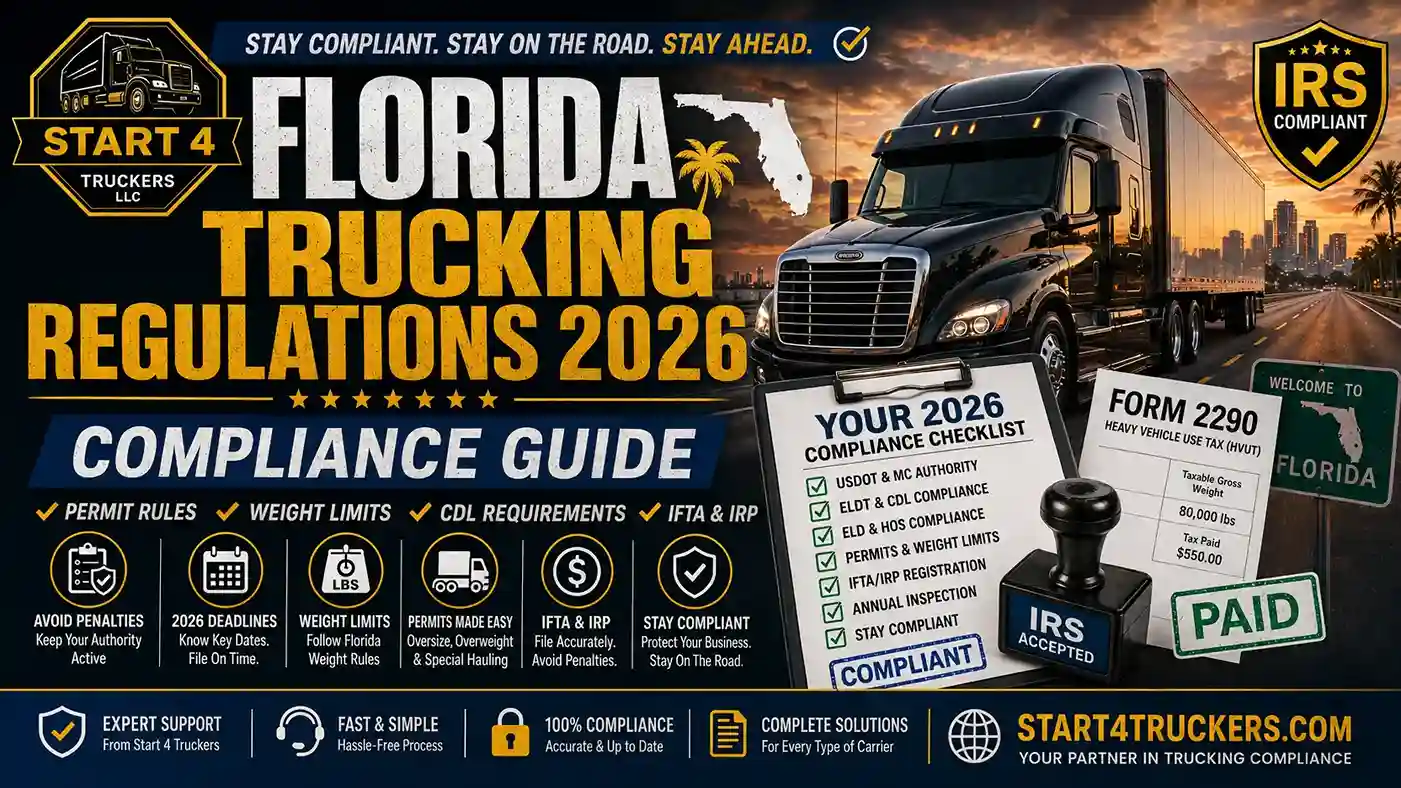
Florida Trucking Compliance Checklist 2026
Use this checklist to make sure your operation is fully covered:
- USDOT Number registered and active
- MC Number (Operating Authority)is active for interstate carriers
- BOC-3 Filing process agent on file
- CDL correct class and endorsements for all drivers
- Medical Certificate current for all CDL drivers
- ELDT Compliance completed for all new CDL applicants
- Drug & Alcohol Clearinghouse registered and queried
- ELD Device installed and functioning (if required)
- Annual DOT Inspection completed and decal displayed
- IRP Registration apportioned plates active
- IFTA Account registered, and quarterly filings are current
- Oversize/Overweight Permits obtained before travel
- Insurance minimum liability coverage is maintained
- Form 2290 (HVUT) filed for vehicles over 55,000 lbs (see 2026 Form 2290 deadline)
- Hazmat Compliance placards, endorsement, and registration in place (if applicable)
Step-by-Step Guide to Staying Compliant in Florida
Step 1: Determine Your Operating Authority
Figure out if you are operating intrastate or interstate. This determines which rules apply and which registrations you need. Read our guide on how to get trucking authority for a full walkthrough.
Also, consider your business structure early, see LLC vs. sole proprietor for trucking, to make the right choice from the start.
Step 2: Secure Permits & Registration
Apply for your USDOT number, MC authority (if needed), IRP plates, and IFTA account. File your BOC-3. Get oversize/overweight permits before any non-standard haul.
Don’t forget to check how to renew your MC authority if your current authority needs updating.
Step 3: Maintain Safety & Inspection Standards
Schedule your annual DOT inspection. Keep ELD devices updated. Run Clearinghouse queries on all drivers. Maintain complete maintenance records for all vehicles.
Step 4: Stay Updated With FDOT & FMCSA Changes
Regulations change. Subscribe to FDOT and FMCSA update notices. Check the federal regulations for any mid-year rule changes.
Step 5: Use Compliance Support
Managing all of this alone is overwhelming. That is where Start4Truckers LLC comes in. Their team handles permit filings, IFTA/IRP setup, DOT compliance, and authority registration so you can focus on driving.
How Start4Truckers LLC Helps Florida Carriers Stay Compliant
Start4Truckers LLC is a full-service trucking compliance company built for carriers of every size. Here is what they handle for Florida operators:
- Permit Filing Support oversize, overweight, and special haul permits
- DOT & FMCSA Compliance authority setup, MCS-150 updates, audits
- IFTA/IRP Quarterly Filing: accurate, on-time filings every quarter
- Authority Setup for New Carriers USDOT, MC number, BOC-3, UCR
- Ongoing Safety & Audit Support SMS monitoring, inspection prep
Whether you are an owner-operator or running a growing fleet, check out their trucking company setup services and plans, and pricing to find the right level of support.
Conclusion
Florida trucking regulations 2026 are detailed, but they are manageable when you break them down. Know your authority type. Keep your CDL and medical card current. File IFTA and IRP on time. Get permits before every oversized move. Maintain your vehicles to pass any roadside inspection. And stay on top of FMCSA updates throughout the year.
Compliance is not a one-time task; it is an ongoing process.
Start4Truckers LLC is here to make that process simple. From setting up your authority to filing your quarterly taxes, their team has Florida carriers covered every step of the way. Visit Start4Truckers.com today and get the compliance support your business deserves.
Frequently Asked Questions
1. What are the major Florida trucking regulation updates for 2026?
The biggest updates include stricter ELD enforcement, full ELDT compliance for new CDL holders, updated FMCSA SMS scoring thresholds, and tighter HazMat rules for intrastate carriers.
2. Do I need a new CDL endorsement under the 2026 Florida rules?
No new endorsement classes were added, but endorsement verification is stricter during renewals. Ensure your HazMat, tanker, or doubles/triples endorsements are current.
3. What is the maximum truck weight allowed in Florida in 2026?
The standard maximum is 80,000 lbs gross vehicle weight on interstate highways. The Florida Turnpike allows up to 88,000 lbs with a permit for qualified vehicles.
4. How do I apply for an oversize/overweight permit in Florida?
Apply through FDOT’s online permit portal (OPOT). You will need route details, vehicle dimensions, and load information. Single-trip and annual permits are available.
5. Does Florida require ELDs for all commercial trucks?
ELDs are required for all carriers that must maintain Records of Duty Status. Short-haul exemptions and some vehicle-age exemptions apply under federal rules.
6. Do Florida intrastate truckers need a USDOT number in 2026?
Yes, if your vehicle exceeds 26,000 lbs GVWR, carries HazMat, or transports passengers for hire. Most commercial carriers in Florida need a USDOT number.
7. Are there new HOS changes affecting Florida drivers?
No major federal HOS changes were made in 2026. The existing 11-hour driving limit, 14-hour window, and 30-minute break rules remain in effect.
8. Who enforces trucking laws in Florida?
The Florida Highway Patrol (FHP) and FDOT’s Commercial Vehicle Enforcement division handle enforcement. FMCSA oversees federal compliance for interstate carriers.
9. What penalties apply for overweight trucks in Florida?
Fines start at $0.05 per pound over the limit and increase with the excess weight. Repeat violations can lead to carrier audits and out-of-service orders.
10. How often must Florida trucks undergo inspection?
Commercial vehicles must pass an annual CVSA inspection. Roadside inspections can happen at any time at weigh stations or during mobile enforcement operations.
11. What registrations do I need under IRP as a Florida carrier?
You need to register with the Florida IRP office, providing mileage records per jurisdiction, vehicle title, insurance proof, and your USDOT number. Fees are apportioned by mileage.
12. Is IFTA required for all Florida-based carriers?
IFTA is required if your vehicle has two axles with a GVWR over 26,000 lbs, or three or more axles, regardless of weight, and operates in more than one IFTA jurisdiction.
13. Are there special routing or zone restrictions in Florida counties?
Yes. Miami-Dade, Orange County, Jacksonville, and Tampa all have specific routing restrictions for commercial vehicles. Always verify local ordinances before entering urban freight zones.
14. Does Florida have new HazMat requirements for 2026?
Florida intrastate HazMat rules have been tightened to align more closely with federal 49 CFR standards. Ensure proper placarding, endorsements, and FMCSA HazMat registration are in place.
15. How can Start4Truckers LLC help me stay compliant?
Start4Truckers LLC handles authority setup, permit filings, IFTA/IRP quarterly reporting, DOT compliance, and ongoing audit support for Florida carriers. Visit their services page to get started.