Starting a trucking company takes more than getting a USDOT Number and MC Authority. Once you’re operating, you’re responsible for ongoing FMCSA compliance, including filings, updates, and safety requirements that don’t stop the day your authority becomes active. That leaves a lot of owner-operators asking the same question: should I handle these filings myself, or hire an FMCSA compliance service?
The right answer depends on your experience, your available time, the size of your operation, and how comfortable you are tracking regulatory deadlines on your own. This guide walks through both paths so you can make the choice that fits your business.
What Is FMCSA Compliance and Why Does It Matter?
FMCSA compliance covers everything a motor carrier is required to maintain under the Federal Motor Carrier Safety Administration, from initial registration through ongoing safety and reporting obligations. It’s different from a one-time registration event. Once your authority is active, compliance becomes an ongoing responsibility that follows your business for as long as you operate.
FMCSA compliance typically includes:
- USDOT Number registration
- MC Authority management
- MCS-150 updates
- BOC-3 filing
- Insurance filings
- UCR registration
- Drug and alcohol compliance
- Safety audit preparation
Getting any one of these wrong, or letting one lapse, can create real problems for your operating authority. If you want a refresher on how registration and compliance connect, our guide on how to get trucking authority covers where this journey starts.
What Are FMCSA Filings Trucking Companies Must Manage?
USDOT Number Registration
Your USDOT Number registration establishes your carrier information, business details, and operating information with FMCSA. It’s the foundation everything else builds on.
MC Authority Registration and Updates
Operating authority comes with its own requirements, and any changes to your business need to be reflected here to keep your authority active. Our comparison of USDOT Number vs MC Number explains how these two pieces work together.
MCS-150 Filing and Biennial Updates
Your carrier profile, including company information, vehicle information, and mileage, has to be kept current through periodic MCS-150 updates. Our MCS-150 biennial update guide covers exactly when and how this needs to happen.
BOC-3, Insurance, and Other Compliance Requirements
Beyond registration, carriers need an active process agent filing, current insurance, and UCR registration to stay in good standing. Our guide on what is BOC-3 filing breaks down that specific requirement in more depth.
Can You Handle FMCSA Filings Yourself?
Yes. Carriers can complete many FMCSA filings themselves, but doing so requires a real understanding of regulations, deadlines, and exactly what each filing requires.
Benefits of Handling FMCSA Filings Yourself
Lower upfront cost. There are no service fees when you file directly, and you keep full control over the process.
You learn your compliance responsibilities. Handling filings yourself gives you a better understanding of what’s actually required and more direct control over your own records.
Simple updates are manageable. Basic changes, like updating an address or minor company information, are often straightforward enough to handle without help.
Challenges and Risks of DIY FMCSA Compliance
Filing mistakes. Incorrect business information, the wrong authority type, or missing documents are common problems when carriers file without guidance.
Missing deadlines. Biennial updates, registration requirements, and other compliance deadlines are easy to lose track of, especially while you’re also running daily operations.
Time requirements. Researching current regulations, tracking changes, and managing paperwork all take time away from actually running your business.
Risk of bigger compliance problems. A missed filing or an overlooked deadline can lead to inactive authority, registration delays, or trouble during an audit. If your authority has ever gone inactive because of something like this, our guide on why MC or DOT can go inactive explains how that happens and how to fix it.
If you’re already feeling behind on any of this, it might be worth a quick conversation before it turns into a bigger issue. Start4Truckers LLC can review where you stand at (210) 588-9348, no obligation.
What Does an FMCSA Compliance Service Do?
FMCSA Registration Assistance
This includes USDOT registration, MC authority applications, MOTUS assistance, and corrections to applications that ran into problems.
Filing Management
A compliance service handles ongoing MCS-150 updates, BOC-3 filing, UCR registration, and insurance filing support so nothing slips through the cracks.
Ongoing DOT Compliance Monitoring
This means deadline tracking, record management, and reminders before something becomes overdue, rather than finding out after the fact.
DOT Audit Preparation
A good compliance service also helps you prepare for your FMCSA New Entrant Safety Audit, organizing documents and reviewing your compliance status before an inspector ever asks for them.
FMCSA Compliance Service vs DIY Filings: Complete Comparison
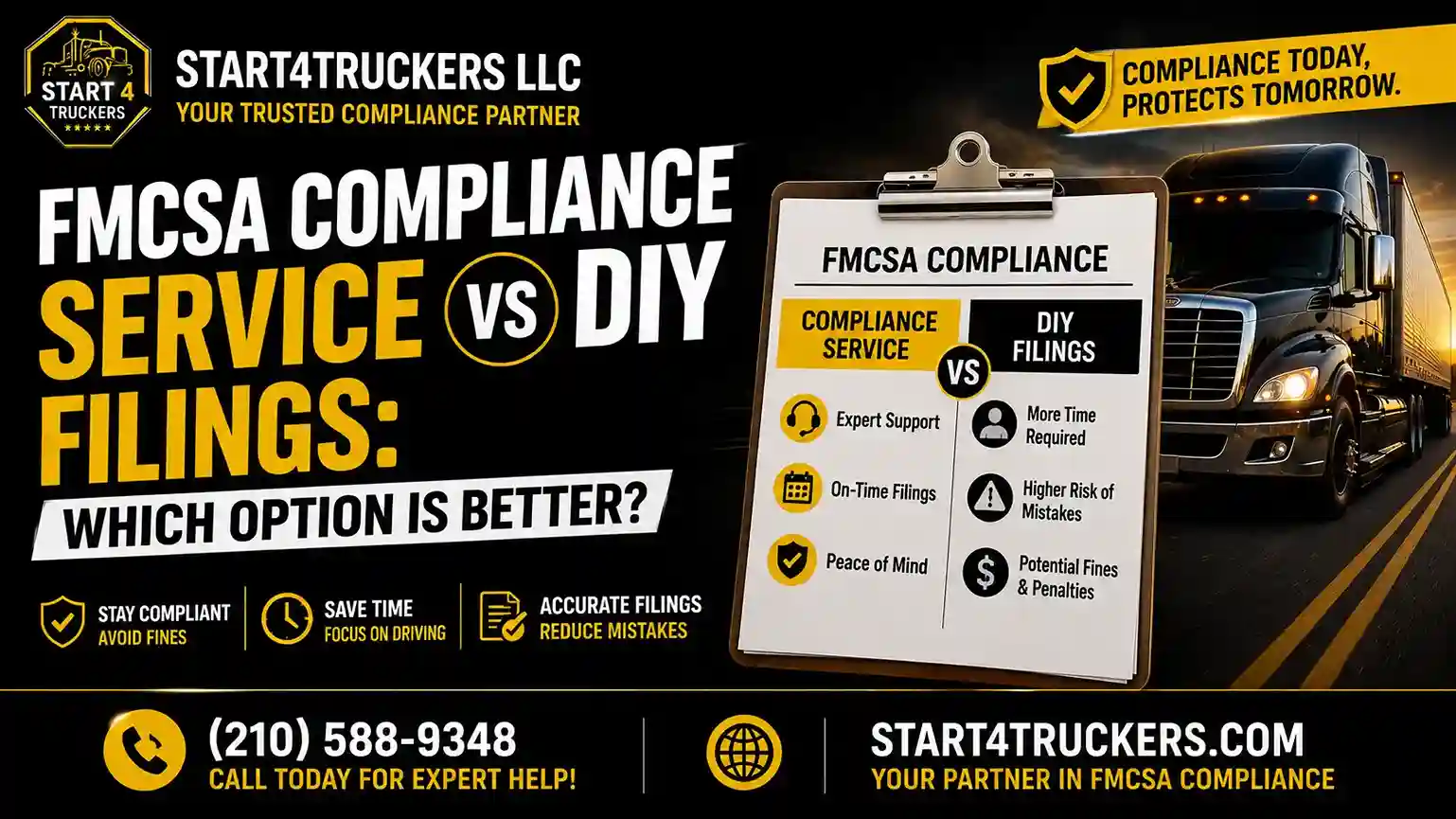
| Category | DIY FMCSA Filings | Compliance Service |
| Cost | Lower upfront cost | Paid service |
| Time required | More time needed | Saves time |
| Knowledge required | High | Experts handle requirements |
| Filing errors | Higher risk | Reduced risk |
| Deadline tracking | Self managed | Professionally monitored |
| Best for | Experienced carriers | New and growing carriers |
Is Hiring an FMCSA Compliance Service Worth It?
Whether a compliance service is worth the cost usually comes down to how much time you have, how complex your operation is, and how comfortable you are with the regulations involved.
For New Trucking Companies
New carriers benefit from avoiding common startup mistakes, getting registration set up correctly the first time, and moving through onboarding faster than they would working alone.
For Owner Operators
Less time spent on paperwork means more time actually driving and generating revenue, along with better overall compliance management without having to become a regulations expert yourself.
For Growing Fleets
More drivers and more vehicles mean more records and more deadlines. At a certain point, the administrative load of DIY compliance starts to compete directly with time spent growing the business.
When Should You Hire an FMCSA Compliance Service?
You Are Starting a New Trucking Company
New carriers often need help getting USDOT registration, MC authority, BOC-3, and insurance filing set up correctly from the start.
You Are New to FMCSA Regulations
The learning curve around FMCSA rules is real, and regulatory complexity can catch new carriers off guard.
You Operate Multiple Trucks or Drivers
More vehicles create more records, more deadlines, and more overall compliance responsibility to manage at once.
You Have Previous Compliance Problems
If you’ve had failed filings, inactive authority, or concerns heading into an audit, professional support can help you get back on solid footing.
Recognize your business in any of these? Start4Truckers LLC can step in and take this off your plate. Call (210) 588-9348 to get started.
Common FMCSA Filing Mistakes Carriers Make Without Professional Help
Incorrect company information, like a wrong legal name or an outdated address, is one of the most frequent issues FMCSA flags.
Missing MCS-150 updates leave carrier information outdated in FMCSA’s system, which can create problems down the line.
Incorrect authority selection, such as confusing property authority with household goods authority, misrepresents your operation to FMCSA. Our guide on property vs household goods vs passenger authority can help you confirm you’ve selected the right one.
Missing compliance deadlines for UCR, biennial updates, or insurance requirements can quietly put your authority at risk.
How Much Does FMCSA Compliance Assistance Cost?
Pricing for FMCSA compliance assistance depends on the services required, the size of your carrier operation, the complexity of your filings, and whether you need one time help or ongoing support. Rather than a single flat number, most providers price based on what your business actually needs, which is worth discussing directly rather than guessing at.
Can Small Trucking Companies Manage FMCSA Compliance Alone?
Small carriers can absolutely manage compliance themselves if they have the knowledge, the time, and the organization to keep up with it. Professional support tends to become more valuable as regulations get more complex, as the business grows, or as compliance risks start to increase.
How to Decide Between DIY FMCSA Filings and Professional Compliance Help
Choose DIY if:
You understand FMCSA requirements
You have time to manage paperwork
You can track deadlines reliably
Your operations are simple
Choose a compliance service if:
You are starting your first trucking company
You want fewer mistakes
You need ongoing support
You operate multiple vehicles
You want help preparing for audits
How Start4Truckers LLC Helps Trucking Companies Stay Compliant
Start4Truckers LLC helps trucking companies manage FMCSA registrations, filings, and ongoing DOT compliance requirements. From USDOT and MC registration to day to day compliance support, carriers can reduce paperwork stress and put their energy into growing the business instead.
Contact Start4Truckers LLC today to get professional FMCSA compliance assistance. Call (210) 588-9348, explore our ongoing DOT compliance service or trucking compliance support, or request a free consultation to see what fits your operation.
Conclusion
There’s no single right answer to DIY filings versus a compliance service. Experienced carriers with time to spare can often manage things on their own, while new companies, growing fleets, and busy owner operators frequently find more value in professional support. Weigh your available time, your comfort with the regulations, and how much risk you’re willing to carry, then choose the path that actually fits your business rather than the one that sounds cheaper on paper.
If you’d rather have a team handle it for you, Start4Truckers LLC is ready to help. Call (210) 588-9348 or contact us to get started.
Frequently Asked Questions
1. Is it better to hire an FMCSA compliance service?
It depends on your experience and available time. New carriers and growing fleets often benefit most, while experienced carriers with simple operations may manage well on their own.
2. Can I complete FMCSA filings myself?
Yes, but you’ll need a solid understanding of FMCSA requirements, deadlines, and the specific details each filing requires.
3. What does an FMCSA compliance company do?
They handle registration, ongoing filings, deadline tracking, and compliance management so carriers don’t have to manage every detail themselves.
4. Do owner operators need compliance services?
Not always, but many find it valuable since it frees up time for driving and reduces the chance of a costly filing mistake.
5. How much does FMCSA compliance service cost?
Pricing varies based on the services required, your carrier size, and filing complexity, so it’s best discussed directly with a provider.
6. What FMCSA filings can I do myself?
Many carriers handle USDOT registration and basic MCS-150 updates themselves, along with other straightforward filings.
7. What are common DIY FMCSA filing mistakes?
Incorrect company information, missed deadlines, and wrong filing selections are among the most frequent issues.
8. Are DOT compliance services worth it for new carriers?
Often yes, since they help new carriers avoid startup mistakes and get registration set up correctly from the beginning.
9. Can compliance services help with DOT audits?
Yes. Many providers help organize documents and review compliance status ahead of a New Entrant Safety Audit or other FMCSA review.
10. How often do FMCSA filings need updates?
MCS-150 filings require a biennial update, and other filings need to be updated any time your business or operating details change.
11. Can a trucking company lose authority due to compliance mistakes?
Yes. Missed filings, incorrect information, or lapsed requirements can lead to inactive status or other authority problems.
12. What documents do FMCSA compliance services manage?
This typically includes MCS-150 filings, BOC-3 filings, insurance filings, and UCR registration, among other compliance documents.
13. Should a new trucking company hire compliance help?
Many new carriers find it worthwhile, since it helps avoid early registration mistakes and builds a solid compliance foundation from day one.
14. Can compliance services manage all DOT requirements?
Available services vary by provider, so it’s worth confirming exactly what’s included before choosing one.
15. How do I choose the right FMCSA compliance service?
Look at their experience, the range of services offered, their industry knowledge, and how responsive their customer support is. Start4Truckers LLC can walk you through what we offer at (210) 588-9348.