Trucking back office support is the administrative work that keeps a trucking company legal and paid while the trucks are moving. It usually covers FMCSA and DOT compliance filings, driver qualification files, permits and registrations, record keeping, fuel tax reporting and billing paperwork. Some carriers handle it in-house. Others outsource part of it to a back office provider.
This guide explains what back office support for trucking companies includes, how carriers manage their records, what it costs and when outsourcing actually makes sense.
What Is Trucking Back Office Support?
Think of the trucking back office as everything that happens off the road. Someone has to file the biennial update, renew the UCR, track medical cards, store logs, send invoices and keep a record of every filing. For a one-truck owner-operator, that’s usually the owner, late at night. For a growing fleet, it can be a full-time job.
Trucking administrative services, sometimes called trucking company administrative support, cover the same ground. Different providers call it transportation back office support or trucking back office management, but the work falls into two groups: compliance and paperwork, and money and billing.
Front Office vs. Back Office in Trucking
The front office faces customers and freight. That’s dispatch, sales, load booking, rate negotiation and check calls with brokers.
The back office supports the business behind those loads:
- Compliance filings with FMCSA and your state
- Driver files and qualification records
- Insurance tracking and renewals
- Fuel tax and registration reporting
- Invoices, proof-of-delivery paperwork and record storage
A dispatcher keeps the truck loaded. The back office keeps the company allowed to haul that load, and makes sure it gets paid for it.
What Services Does a Trucking Back Office Handle?
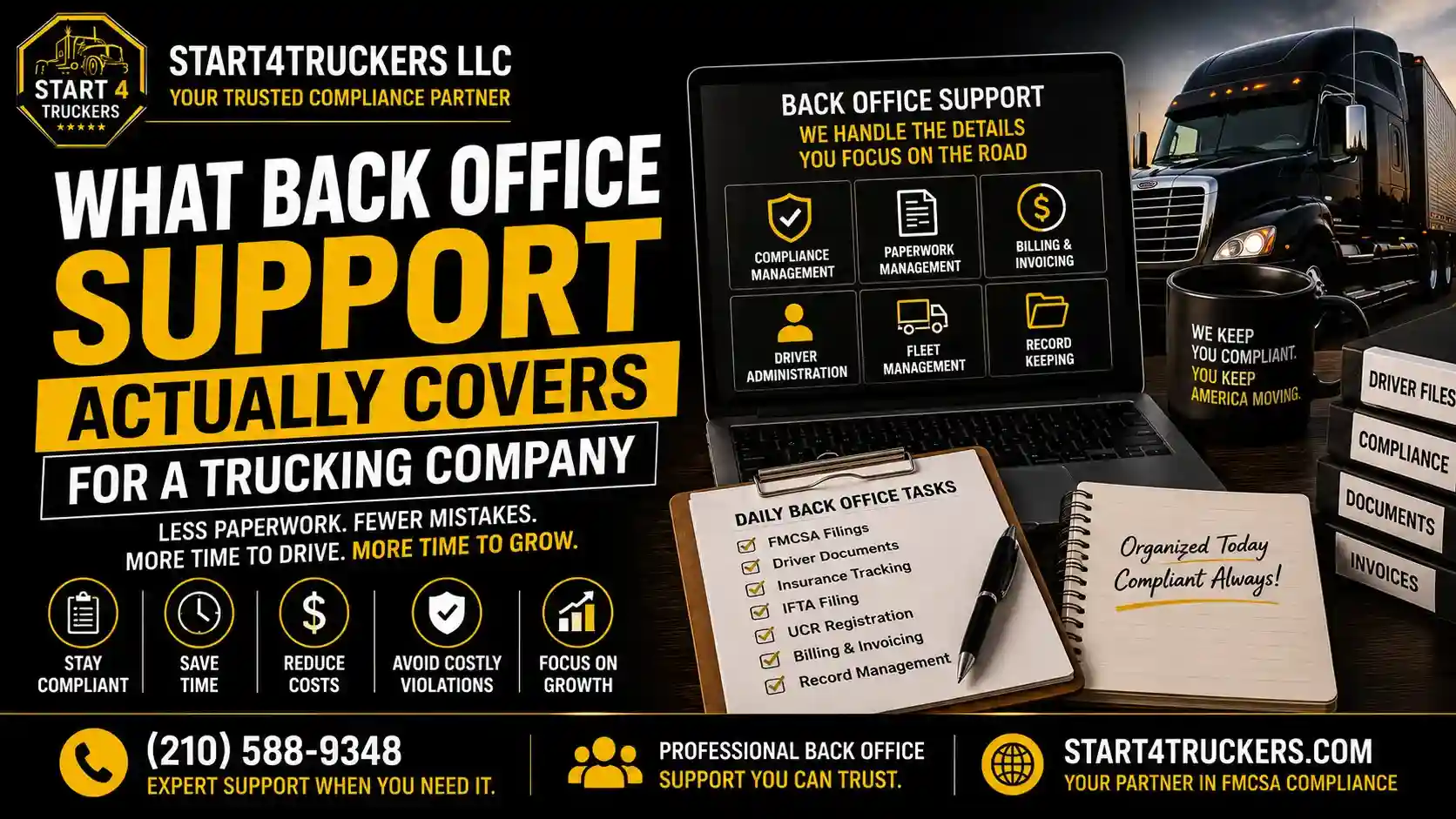
Most trucking back office services fall into five areas. A provider may offer all five or only a few.
FMCSA and DOT Compliance Management
This is the core of most DOT compliance services for trucking companies, and the part most carriers think of as DOT paperwork. It includes:
- USDOT and operating authority filings: New registrations, changes and reinstatements in Motus, FMCSA’s registration system. Most new carriers start with USDOT registration before they apply for operating authority.
- Biennial updates: Every carrier must file an MCS-150 biennial update every 24 months, even if nothing changed. Missing it can lead to penalties and a deactivated USDOT number.
- Process agent filings: For-hire interstate carriers must have a BOC-3 process agent filing with FMCSA. It names an agent in each state who can accept legal papers for you.
- UCR registration: An annual registration for interstate carriers, renewed each year.
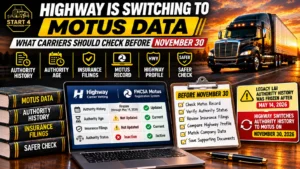
In Motus, you don’t have to share your login with a provider. You designate a service provider for your company account, and the provider has to accept before it can act for you. Your Company Official, usually the owner, stays in control of the account.
Trucking Paperwork and Record Management
Trucking paperwork management, sometimes called carrier record management, means keeping every required document current, organized and easy to find. FMCSA rules set how long carriers must keep many records:
| Record | How long to keep it | Rule |
| Hours-of-service logs and supporting documents | 6 months | 49 CFR 395.8(k) |
| Vehicle maintenance records | 1 year, plus 6 months after the vehicle leaves your fleet | 49 CFR 396.3(c) |
| Accident register | 3 years after the accident | 49 CFR 390.15 |
| Positive drug and alcohol test results | 5 years | 49 CFR 382.401 |
| Negative drug and alcohol test results | 1 year | 49 CFR 382.401 |
Trucking paperwork services also cover insurance certificates, permits, IRP cab cards, Form 2290 receipts and registration confirmations. When an auditor or broker asks for a document, you should be able to pull it in minutes, not days.
Driver Qualification Files and Administration
Every carrier has to keep a driver qualification (DQ) file for each driver it employs. Under 49 CFR 391.51, the file holds items such as the application, motor vehicle records and medical certificate. You keep it for as long as the driver works for you, plus 3 years.
Back office support can build DQ files at hiring, track medical card and license expiration dates, schedule annual record reviews and run queries in the Drug and Alcohol Clearinghouse for CDL drivers.
Driver qualification file outsourcing takes the workload off you. It doesn’t move the responsibility. FMCSA still holds the carrier accountable for complete, accurate files, and the carrier signs its own filings.
Billing, Invoices and Freight Documentation
Getting paid depends on paperwork, too. This part of the back office, often called billing administration, handles rate confirmations, bills of lading, proof of delivery, invoices and follow-up on late payments. Many carriers hand invoicing and collections to a freight factoring company.
Trucking bookkeeping services are a related but separate service. They cover your accounts, expenses and tax records. Some back office providers include bookkeeping, and many don’t.
Fleet Administration and Compliance Tracking
As you add trucks, fleet back office operations take up more of your week. Much of that work is fleet compliance management, which means staying ahead of the same deadlines every year:
- IFTA reporting: Quarterly fuel tax returns are due April 30, July 31, October 31 and January 31. You can also get the information on IFTA registration.
- IRP renewals: Apportioned plates are renewed every year.
- Form 2290: The heavy vehicle use tax is due each year for trucks of 55,000 pounds or more.
- Insurance tracking: Policy renewals, certificate requests and making sure your insurer’s filing with FMCSA stays active.
- Drug and alcohol program: Random testing pool membership and annual Clearinghouse queries.
Here’s who usually does what:
| Service area | Typical tasks | Who stays responsible |
| FMCSA and DOT compliance | Biennial update, UCR, BOC-3, authority filings | The carrier and its Company Official |
| Paperwork and records | Filing, storage and document requests | The carrier |
| Driver files | DQ files, medical card tracking, Clearinghouse queries | The carrier |
| Billing and freight documents | Invoices, PODs, collections | The carrier, or a factoring company for collections |
| Fleet administration | IFTA, IRP, Form 2290, insurance tracking | The carrier |
A provider can do the work, but the carrier signs the filings and answers to FMCSA.
How Do Trucking Companies Manage Back Office Records and Systems?
Good systems don’t have to be expensive. Most small carriers do fine with four basics.
Start with one digital filing system. Scan every document into folders by type: company, drivers, vehicles, filings and billing. Use cloud storage with backups.
Add a compliance calendar with every deadline in one place, including the biennial update, UCR, IFTA quarters, IRP, Form 2290, medical cards and insurance renewals. Set reminders 30 days ahead.
Control access. Keep driver medical, drug testing and Social Security information away from people who don’t need it, and store drug and alcohol records apart from the DQ file.
Last, use tools only where they save time. An ELD keeps your hours of service, and a transportation management system (TMS) can link loads, invoices and documents.
Keep your company details identical everywhere. Your legal name, EIN and address should match across IRS records, your state filing, Motus, insurance and IRP. Mismatches are one of the most common reasons filings get held up.
How Can Trucking Companies Reduce Back Office Costs?
You don’t need a full-time office manager to keep the back office under control. Ways to cut costs:
- Outsource selected tasks, not everything. Trucking back office outsourcing works best on the tasks that eat your time. Many owner-operators keep invoicing in-house and start with trucking compliance outsourcing: IFTA, UCR and the biennial update.
- Avoid penalties. A missed deadline often costs more than the filing. Late IFTA returns bring penalties and interest, and the biennial update has its own deadline even while enforcement is paused.
- Compare real numbers. Count the hours you or an employee spend on paperwork each month, then compare that with a provider’s fee for the same tasks.
For a side-by-side look, see FMCSA compliance service vs. DIY filings.
When Should a Small Trucking Company Outsource Back Office Support?
Small trucking company support makes the most sense at a few points:
- You’re a one-truck operator. You’re driving all day, and filings pile up at night. Outsourcing the deadline-driven work keeps you from missing a renewal.
- You’re hiring your first drivers. DQ files, drug testing and Clearinghouse queries start the day you hire a CDL driver.
- You’re in your new entrant period. New interstate carriers go through a new entrant safety audit. Clean, organized records make that audit easier.
- Your fleet is growing. More trucks mean more IRP, IFTA and insurance work, and more places for something to slip.
- You’ve had a compliance problem. A deactivated USDOT number or a failed audit is a sign the current system isn’t working.
Back Office Support vs. Dispatch Services
| Dispatch services | Back office support | |
| Main goal | Keep trucks loaded | Keep the company compliant and paid |
| Typical tasks | Finding loads, rate negotiation, scheduling, check calls | Filings, driver files, records, IFTA, billing paperwork |
| Works with | Brokers and shippers | FMCSA, state agencies, insurers, factoring companies |
| Pricing | Often a percentage of each load | Often per filing or a monthly fee |
Service boundaries depend on the provider. Some dispatchers handle invoicing. Some back office providers include dispatch. Ask for a written list of what’s included before you sign.
How Much Does Trucking Back Office Support Cost?
There’s no standard price. Costs depend on:
- How many trucks and drivers you have
- Whether you run interstate or only in one state
- Which services you need, such as filings only or filings plus driver files and billing
- Whether you need one-time help or ongoing monthly support
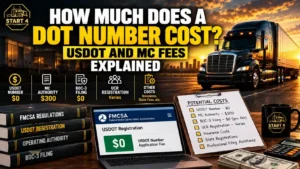
Government fees are separate from any provider’s fee. UCR, IRP plates, IFTA taxes and Form 2290 are paid to the government no matter who files them. Before you hire anyone, confirm exactly which tasks are included, what costs extra and who you contact when a deadline is close.
How Start4Truckers.com Helps With Back Office Compliance
Start4Truckers.com provides trucking compliance services for owner-operators and small fleets. We’re a private company. We handle the filings that keep a carrier legal, including:
- USDOT and MC authority registration
- BOC-3, UCR and MCS-150 biennial updates
- IFTA registration and quarterly filing
- IRP apportioned plates and Form 2290
- Drug and alcohol consortium enrollment and Clearinghouse registration
For carriers who’d rather not track deadlines themselves, we also offer monthly ongoing DOT compliance and back office support. Not sure whether you need a USDOT number, MC authority or both? Read DOT number vs. MC number. Starting from scratch? Our guide to starting a trucking company covers the first filings. Or call (210) 588-9348.
Frequently Asked Questions
What does a trucking back office actually do?
It handles the work that keeps a carrier legal and paid: compliance filings, driver files, permits, record keeping, fuel tax reporting and billing paperwork.
What paperwork can a trucking back office manage?
Biennial updates, UCR, BOC-3, IFTA returns, IRP renewals, Form 2290, insurance certificates, DQ files, invoices and proof-of-delivery documents.
Can I outsource driver qualification file administration?
Yes. A provider can build and track DQ files, but FMCSA still holds your company responsible for keeping them complete and accurate.
How can I reduce back office costs in my trucking company?
Outsource the deadline-driven filings, keep one digital record system and use a compliance calendar so you don’t pay penalties for missed deadlines.
Is back office support worth it for a one-truck company?
Often, yes, for filings with fixed deadlines like IFTA, UCR and the biennial update. Many owner-operators keep invoicing in-house and outsource the rest.
What is the difference between trucking dispatch and back office support?
Dispatch finds and books loads. Back office support handles compliance, records and billing paperwork. Some providers offer both.
Do trucking companies need back office software?
Not necessarily. Small carriers can manage with cloud storage, an ELD and a compliance calendar. A TMS helps more as the fleet grows.
How much does trucking back office support cost?
It depends on fleet size and which services you need. Government fees are always separate, so ask any provider for a written list of what’s included.