FMCSA RANDOM DRUG & ALCOHOL TESTING
DOT Drug & Alcohol Consortium for Trucking Companies
Random Pool · Pre-Employment Testing · Post-Accident · Owner Operator Friendly
Same Day Enrollment
Same Day Setup Time
12,000+ Pool Members
Nationwide Test Centers
50% Annual Random Rate
What is a DOT drug & alcohol consortium?
A DOT drug and alcohol consortium for trucking is a group of motor carriers and owner operators pooled together for random drug and alcohol testing under FMCSA rules. The consortium is run by a Consortium/Third-Party Administrator (C/TPA) that selects drivers randomly each quarter, schedules tests at certified labs, and reports results to employers.
FMCSA rules require a 50% random drug testing rate and 10% random alcohol testing rate of average driver positions per year. Single-truck owner operators cannot meet these statistical rates alone, which is exactly why federal rules require them to join a consortium with other CDL drivers.
What is a C/TPA and Why Do You Need One?
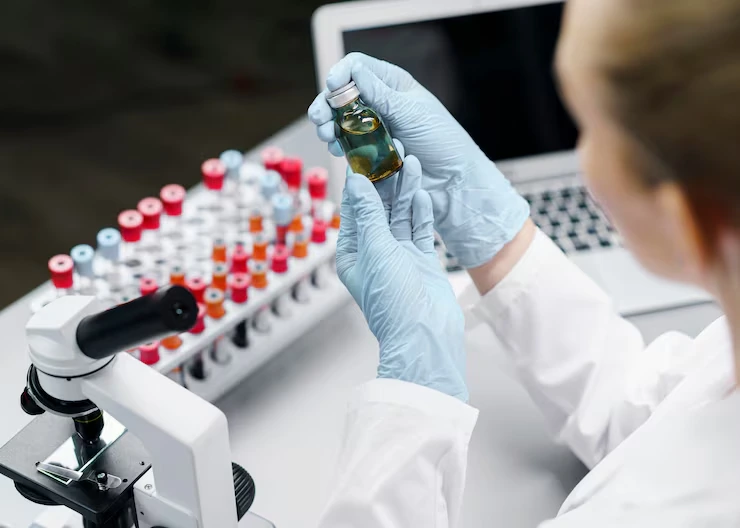
A Consortium/Third-Party Administrator, or C/TPA, is the federally authorized organization that manages your drug and alcohol testing program on your behalf. The C/TPA does three things: it adds your drivers to the random testing pool, it selects drivers for testing each quarter based on the federally required rates, and it reports any violations directly to the FMCSA Drug and Alcohol Clearinghouse.
Federal rules require that a C/TPA be independent from the carrier. You cannot manage your own random testing program. This is especially important for owner operators, who are both the employer and the driver in the same person. Because you cannot randomly select yourself, federal regulations require you to join a C/TPA-managed consortium where selections are made by a neutral third party.
What Does a DOT Drug Test Screen For?
The DOT requires a specific 5-panel urine drug test for all CDL drivers in safety-sensitive positions. This test is standardized by the Department of Transportation and cannot be substituted with a different panel or testing method. The five substances screened are:
Marijuana (THC metabolites) — including legal medical or recreational marijuana in any state
Cocaine (benzoylecgonine) — including cocaine and crack cocaine
Opioids — including codeine, morphine, heroin, hydrocodone, hydromorphone, oxycodone, and oxymorphone
Phencyclidine (PCP)
Amphetamines — including amphetamine, methamphetamine, MDMA (ecstasy), and MDA
A critical point for truckers in legal marijuana states: a positive marijuana result on a DOT drug test is a violation regardless of your state’s marijuana laws. Federal DOT rules supersede state law for CDL holders in safety-sensitive positions. A prescription for medical marijuana does not protect you from a DOT positive result.
DOT drug tests are conducted as observed urine collections at SAMHSA-certified collection sites. The sample is sent to a certified laboratory and reviewed by a Medical Review Officer (MRO) before any result is reported to the employer. The MRO contacts the driver directly if there is a prescription or medical explanation that may affect the result.
DOT Alcohol Testing
Alcohol testing under DOT rules uses a breathalyzer administered by a Breath Alcohol Technician (BAT). The standard for alcohol violations in trucking is a breath alcohol concentration of 0.04 or higher. A reading between 0.02 and 0.039 requires the driver to be removed from safety-sensitive duties for 24 hours but is not a formal violation requiring return-to-duty treatment.
Who Needs to Join a Drug & Alcohol Consortium?
Federal rules require every CDL driver in a safety-sensitive position to be enrolled in a random testing pool. Three groups consistently need a consortium.
Owner Operators
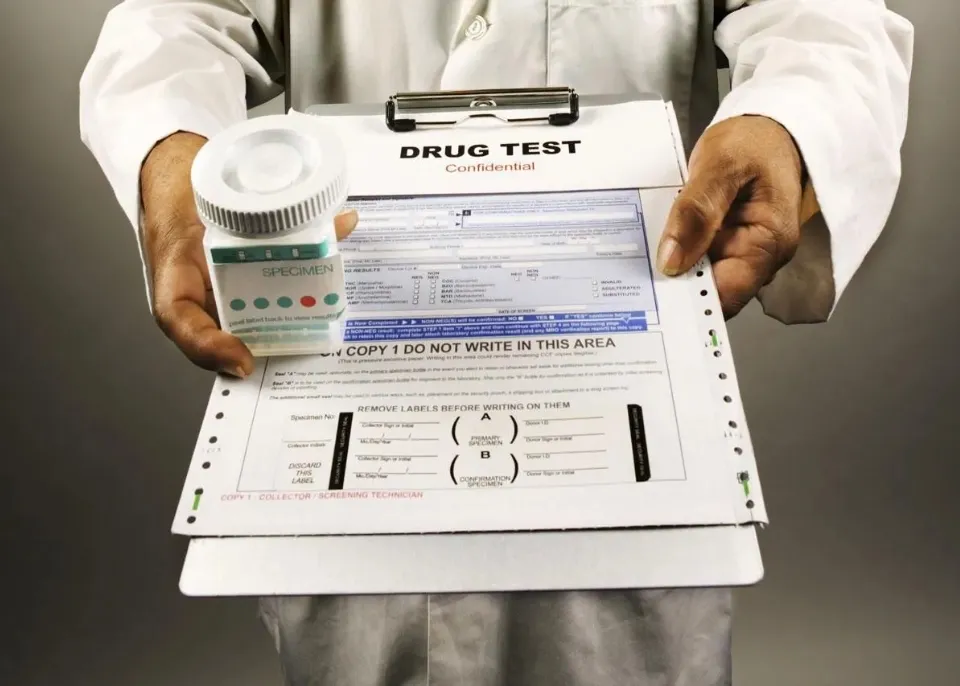
An owner operator drug testing consortium is mandatory for solo CDL holders. You cannot legally test yourself randomly, so federal rules require pool membership with an independent C/TPA. This applies from the day you receive your MC authority — not after your first load, not after 90 days. From day one of your operating authority, you must be enrolled.
Small Fleets
Small fleets with fewer than 50 drivers benefit from joining a larger consortium pool. Combined pools make the random selection statistically valid for FMCSA rules. Fleets running their own internal testing program still need a C/TPA to manage the selections to maintain independence.
New Carriers
Every new motor carrier must enroll in a drug and alcohol testing program before any driver operates a commercial motor vehicle. The FMCSA New Entrant Safety Audit, which occurs within your first 12 to 18 months of operation, specifically reviews your drug and alcohol testing records. Missing consortium enrollment is one of the top reasons new carriers fail their New Entrant audit.
Pre-Employment Drug Testing Requirements
Before any new CDL driver operates a commercial motor vehicle for your company, you must complete two steps. First, run a pre-employment query in the FMCSA Drug and Alcohol Clearinghouse to check for any violations from previous employers. Second, administer a pre-employment drug test and receive a negative result before the driver’s first dispatch.
There is no exception to either requirement. A driver cannot operate even a single load on your authority before the pre-employment test result is received and verified as negative. Sending a driver out before the result comes back is a direct FMCSA violation, even if the result eventually comes back negative.
Return drivers who have been off your payroll for 30 or more days and have been out of random testing pool coverage require a new pre-employment test before returning to safety-sensitive duties. This catches carriers who let seasonal or temporary drivers return without re-testing.
How Our Consortium Membership Works
We enroll you in a managed random testing pool, schedule selected drivers automatically, and handle MRO review and reporting for every test. Here is the full process once you are enrolled.
Submit Your Info
Provide your DOT number, CDL details, and driver list. About 5 minutes for owner operators. Fleets provide a driver roster with CDL numbers and hire dates.
Pool Enrollment
We add you to our managed FMCSA random drug testing pool with thousands of other CDL drivers nationwide. Enrollment is same-day and your pool membership is active immediately.
Random Selections
Each quarter, our C/TPA system randomly selects drivers for testing at the federally required 50% drug and 10% alcohol annual rates. Selections are made by computer, not by hand, ensuring the independence the FMCSA requires.
Test Coordination
Selected drivers receive same-day notification with the nearest certified collection site and report deadline. The collection site network covers all major trucking routes nationwide.
How to Find a DOT Drug Testing Collection Site
When you are randomly selected for a drug test, you have a specific window to complete the collection — typically within 24 hours of notification for random tests. Missing that window without a valid reason is treated the same as a refusal, which is a direct violation equivalent to a positive test result.
As a member of our consortium, you receive same-day notification and a direct link to locate the nearest certified collection site on your current route. Collection sites include standalone testing clinics, occupational health centers, and some urgent care facilities that are certified under SAMHSA guidelines.
You do not need to return to your home state to complete the collection. Any SAMHSA-certified collection site in any state accepts your testing order. If you are mid-route when selected, you complete the test at the nearest site and continue your haul.
For alcohol testing, a Breath Alcohol Technician must administer the breathalyzer at a certified BAT location. Not every drug testing site has BAT capability, so we direct you specifically to sites equipped for DOT alcohol testing when that test is required.
What Happens If a Driver Tests Positive
A confirmed positive result triggers an immediate sequence of required steps under DOT rules. Understanding this process in advance helps carriers and drivers respond correctly rather than making decisions that compound the problem.
Immediate Removal from Safety-Sensitive Duties
The moment a positive or refusal result is confirmed by the MRO, the driver must be immediately removed from all safety-sensitive functions. This means no driving a CMV, no loading or unloading, and no other safety-sensitive duties. The employer cannot allow the driver to operate regardless of schedule pressures or load commitments.
Clearinghouse Reporting
The C/TPA or employer must report the violation to the FMCSA Drug and Alcohol Clearinghouse within 3 business days of the MRO's final report. Once reported, the violation is visible to every prospective employer who runs a Clearinghouse query on that driver for the next 5 years.
Substance Abuse Professional (SAP) Evaluation
The driver must be referred to and evaluated by a qualified Substance Abuse Professional. The SAP determines what education, treatment, or follow-up testing is required before the driver can be considered for return to safety-sensitive duties. The driver pays for the SAP evaluation and any required treatment out of pocket.
Return-to-Duty Testing
Before the driver can return to operating a CMV, they must pass a return-to-duty drug and/or alcohol test administered under direct observation. A negative result on the return-to-duty test, combined with the SAP's clearance, allows the driver to return to work.
Follow-Up Testing
After returning to duty, the driver enters a follow-up testing program of at least 6 unannounced tests in the first 12 months. The SAP may require follow-up testing for up to 5 years. These tests are in addition to normal random pool testing.
What Happens If You Operate Without a Consortium
CDL drivers operating outside a random testing pool face automatic FMCSA violations during any audit or roadside check. The consequences compound quickly.
Direct CitationsDirect Citations in Every Audit
Operating CDL drivers without a random testing program is a direct FMCSA violation cited during every Compliance Review and New Entrant audit. There is no warning issued for a first offense. The citation is automatic when the auditor finds no consortium enrollment documentation.
Per-Driver Penalties
Each driver outside a pool counts as a separate violation. A small fleet with four CDL drivers missing from a consortium faces four separate penalty citations. Civil penalties for drug and alcohol program violations start at several thousand dollars per violation.
Authority at Risk
Repeat or severe drug and alcohol program failures can result in revocation of operating authority. The FMCSA does not issue informal warnings on these violations. A carrier with a pattern of non-compliance can be placed out of service at the federal level
Consortium vs. Other Drug & Alcohol Requirements
Consortium membership is one piece of the full DOT drug and alcohol compliance program. Here is how all the requirements fit together.
Requirement | What It Is | When Required |
Random Pool (Consortium) | Quarterly random selection at 50% drug / 10% alcohol annual rates | Before first dispatch — ongoing |
Pre-Employment Test | One-time drug test before a new CDL driver’s first load | Before any new driver operates a CMV |
Clearinghouse Registration | Federal database of CDL drug & alcohol violations. Separate from consortium | Before hiring any CDL driver |
Post-Accident Testing | Mandatory testing after qualifying accidents with specific timing rules | After any qualifying accident |
Reasonable Suspicion | On-the-spot testing when supervisor observes specific indicators | When supervisor has documented reasonable suspicion |
Return-to-Duty Test | Required after a positive result before driver can return to CMV duties | After positive result, SAP completion |
Random Pool
Quarterly random selection at federally required 50% drug, 10% alcohol annual rates. Required for all CDL drivers.
Pre-Employment
One-time test before any new CDL driver operates a CMV. Negative result required before dispatch.
Post-Accident
Mandatory testing after qualifying accidents. Specific timing rules apply for both alcohol and drug tests.
Reasonable Suspicion
On-the-spot testing when supervisors observe specific indicators. Documented training required for supervisors.
Common Drug & Alcohol Compliance Mistakes Owner Operators Make
These are the mistakes that show up most often during New Entrant audits and Compliance Reviews. Each one is citable and each one is avoidable.
Waiting to Enroll Until After the First Load
Federal rules require consortium enrollment before any driver operates a CMV under your authority. Enrolling after your first week of hauling means you drove unregistered in the testing pool. Auditors check the enrollment date against your first dispatch date. The gap is a direct violation.
Thinking the Clearinghouse Registration Replaces the Consortium
The FMCSA Drug and Alcohol Clearinghouse is a database. The consortium is a testing pool. They are completely separate requirements. You need both. Registering in the Clearinghouse does not put you in a random testing pool.
Owner Operators Trying to Manage Their Own Testing
Federal rules explicitly prohibit owner operators from managing their own random testing program. Self-selecting when you will test, or using a friend or family member to administer a test, is not compliant. An independent C/TPA must manage your selections.
Missing the Pre-Employment Test for Returning Drivers
Drivers who have been off your payroll for 30 or more days and out of random pool coverage need a new pre-employment test before returning to safety-sensitive duties. Many carriers skip this for returning seasonal drivers. It is a violation every time.
Not Running the Annual Clearinghouse Query on Current Drivers
Every employer must run an annual query in the FMCSA Clearinghouse on every current CDL driver, every 12 months. Missing the annual query for even one driver is a separate violation per driver. Most carriers who have the pre-employment query habit forget the annual requirement.
Why Choose Start 4 Truckers' Consortium
We have managed drug and alcohol testing pools for thousands of trucking companies and owner operators. The pool is large, the test centers are nationwide, and the MRO review is handled in-house.
Same-Day Enrollment
Most consortium memberships are active the same business day you sign up. No waiting for batch enrollment cycles. Your compliance starts immediately, not at the beginning of the next quarter.
12,000+ Pool Members Nationwide
A larger pool means the random selection is statistically valid and FMCSA-compliant. Small pools with fewer members can face audit scrutiny over whether the selection rates are being properly applied.
Nationwide Collection Sites
Access to thousands of certified drug and alcohol collection sites across the country. Find one near any major trucking route. When you are selected, we direct you to the nearest compliant site — you do not have to search on your own.
MRO Review on All Non-Negatives
All non-negative test results are reviewed by a certified Medical Review Officer before reporting to you. The MRO contacts the driver directly if there is a legitimate prescription explanation. You receive only verified, final results.
Clearinghouse Reporting Handled
Violation results are reported directly to the FMCSA Drug and Alcohol Clearinghouse as required by federal rule. You do not have to manage this reporting separately.
Annual Employer Report Included
FMCSA requires annual employer reports on drug and alcohol testing statistics. We prepare and file yours as part of your consortium membership. This is one of the most commonly missed compliance requirements in DOT audits.
Frequently Asked Questions
Owner operator consortium membership typically runs $40 to $150 per year depending on the included services. Per-test fees apply when you are randomly selected, usually $40 to $80 per drug test and $30 to $50 per alcohol test. Start 4 Truckers offers flat annual packages that include pool enrollment, quarterly selections, and annual employer reporting.
Federal rules require a 50% annual drug testing rate and 10% annual alcohol testing rate applied through random quarterly selections. Statistically, a CDL driver in a properly-sized pool can expect 0 to 2 random selections per year. There is no way to predict the timing. Selections are computer-generated to ensure genuine randomness.
A consortium is the random testing pool that physically selects and conducts tests. The FMCSA Clearinghouse is a separate federal database that records drug and alcohol violations. Both are required. The consortium runs the testing. Violation results are then reported to the Clearinghouse. Registering in the Clearinghouse does not enroll you in a testing pool.
No. Federal rules explicitly require owner operators to join a Consortium/Third-Party Administrator pool because solo drivers cannot run statistically valid random testing on themselves. Self-testing or self-selection is not allowed and is treated as a program failure during DOT audits.
The DOT requires a 5-panel urine test screening for marijuana (THC), cocaine, opioids (including hydrocodone, oxycodone, morphine, codeine, and heroin), PCP, and amphetamines (including methamphetamine and ecstasy). Alcohol testing uses a breathalyzer with a violation threshold of 0.04 BAC. Medical marijuana prescriptions do not exempt a driver from a positive marijuana result under federal DOT rules.
Failure to appear for a randomly selected drug or alcohol test within the required window is treated as a refusal, which carries the same consequences as a positive test result. The driver is immediately removed from safety-sensitive duties and must complete the full return-to-duty process including SAP evaluation. This is why we send same-day notifications with clear deadlines when you are selected.
When you are selected, we provide same-day notification and direct access to locate the nearest certified collection site on your current route. You do not need to return home. Any SAMHSA-certified collection site in any state accepts your testing order. We also identify sites with BAT capability when alcohol testing is required.
Yes. Start 4 Truckers consortium membership scales from single-truck owner operators to fleets of any size. Adding drivers to your account takes minutes, and the random selection rates adjust automatically based on your average driver count each quarter.
FMCSA requires employers to submit an annual Management Information System (MIS) report summarizing their drug and alcohol testing activity for the year. This report covers the number of tests conducted, positive results, refusals, and return-to-duty tests. Missing this annual report is a citable violation in DOT audits. Start 4 Truckers prepares and files this report as part of your consortium membership.
What our clients say
"Joined the consortium when I went owner operator. Got randomly selected six months in, found a collection site twenty minutes off my route, done in an hour. Easy process."
— Wesley M., Owner Operator, Oklahoma
"Switched our fleet to Start 4 Truckers' consortium last year. The MRO review and clearinghouse reporting all happen automatically. Saves my safety manager about ten hours a month."
— Diana B., Fleet Safety Manager, North Carolina
Join Our DOT Consortium Today
Same-day enrollment in a federally compliant random testing pool. Owner operators welcome. Pricing scaled for any fleet size.Same-day enrollment in a federally compliant random testing pool. Owner operators welcome. Pricing scaled for any fleet size.
Call us at (210) 588-9348 or visit start4truckers.com to get enrolled today. Same-Day Enrollment · Nationwide Test Sites · MRO Review · Clearinghouse Reporting · Annual Employer Report Included