Before FMCSA issues a new USDOT Number, every motor carrier has to submit an Initial MCS-150 Filing. This single form asks for a lot of detail about your company, your vehicles, your drivers, and how you plan to operate, and getting any of it wrong can slow down your entire registration.
Many new carriers aren’t sure exactly what information FMCSA is asking for, or why it matters. This guide breaks down every section of the MCS-150 form, explains what each field means, and shows you how to avoid the mistakes that most often delay a new carrier’s application.
If you’d rather have someone handle the paperwork for you, Start4Truckers LLC helps new carriers understand FMCSA registration requirements and complete important compliance filings correctly the first time.
What Information Goes on an Initial MCS-150 Filing?
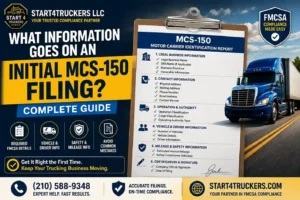
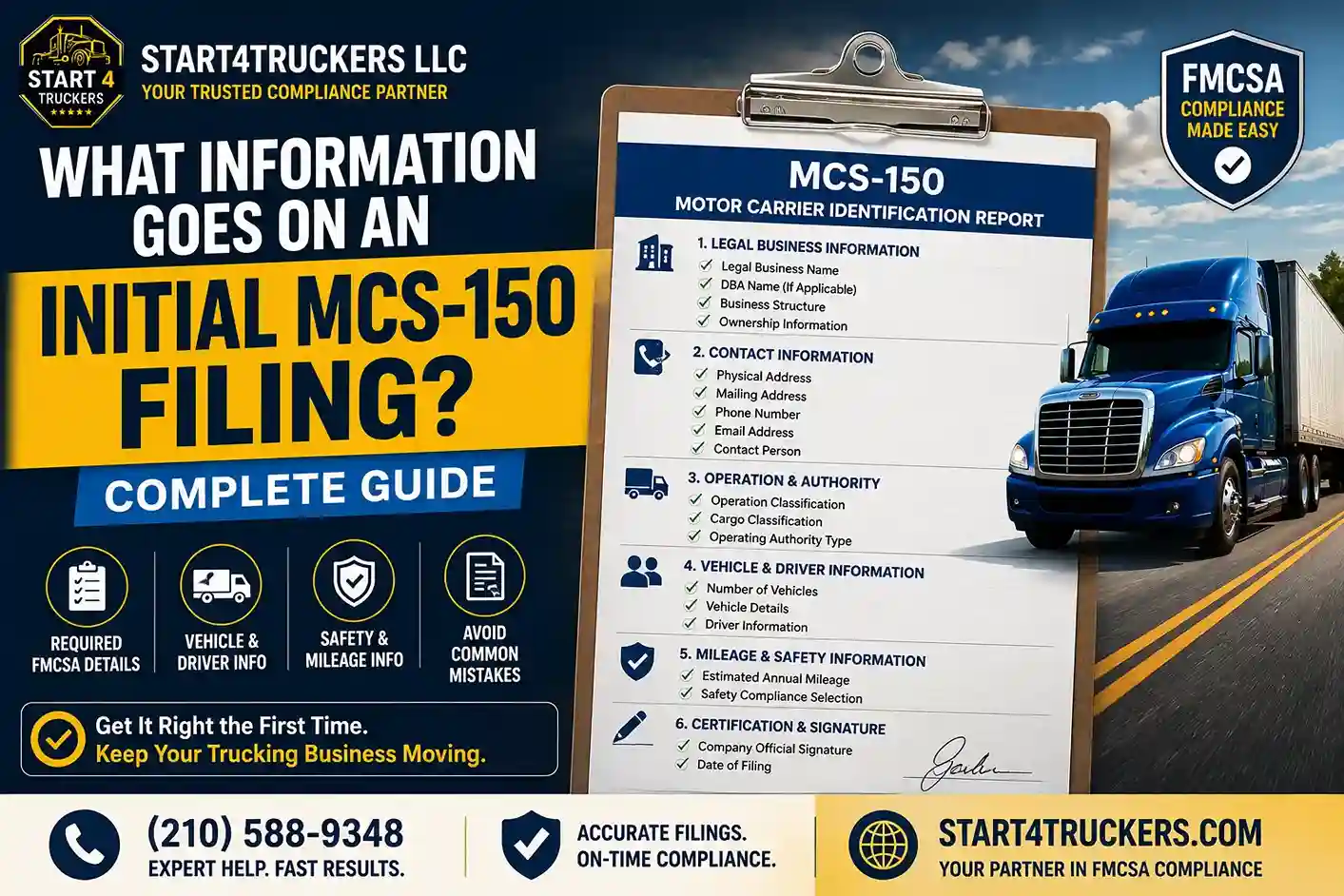
An Initial MCS-150 Filing requires information about your trucking company, including your legal business name, address, contact details, operation type, vehicle information, driver details, cargo classification, and estimated mileage. FMCSA uses this information to create your carrier profile and assign or update your USDOT registration records.
What Is an Initial MCS-150 Filing?
The MCS-150 is officially called the Motor Carrier Identification Report. It’s the form FMCSA uses to gather core information about a trucking company before assigning a USDOT Number. The form covers everything from your legal business name to the number of trucks in your fleet, and FMCSA uses that information to build your carrier profile inside its registration system.
Your MCS-150 filing directly ties into your USDOT Number, which acts as your carrier’s identification number for safety monitoring, compliance checks, and public record purposes through the SAFER System.
Why Does FMCSA Require an MCS-150 Filing?
FMCSA requires the MCS-150 so it can identify who is operating on the roads, track basic safety and operational information, keep its national carrier database accurate, and meet its regulatory oversight responsibilities. Without this information, FMCSA would have no reliable way to monitor carriers or maintain accurate registration records.
Is MCS-150 Required to Get a USDOT Number?
Yes. In almost every case, a carrier applying for a USDOT Number must submit MCS-150 information as part of that application. The form gives FMCSA the operational details it needs to process the registration and assign your number.
Who Needs to Complete an Initial MCS-150 Filing?
New Trucking Companies
Any company starting interstate operations or applying for USDOT registration for the first time needs to file an MCS-150.
Owner Operators
Independent drivers running a single truck business still need to complete an MCS-150 filing before they can legally operate under their own USDOT Number.
For Hire and Private Carriers
Whether you haul freight for other companies or move goods for your own business, FMCSA requires you to file, though the specific details you report will differ based on your carrier type.
What Information Is Required on an Initial MCS-150 Filing?
Here’s the full checklist of information FMCSA expects on your filing.
1. Legal Business Information
You’ll need your legal business name, your DBA name if you operate under one, your business structure, ownership information, and your principal place of business. Accurate company information matters because FMCSA cross-checks this data against state business records and other filings, and a mismatch can trigger delays or a manual review later on.
2. Mailing Address and Contact Information
This section includes your physical address, mailing address (if different), phone number, email address, and a contact person for your business. Incorrect contact details are one of the easiest ways to miss important FMCSA communication, so it’s worth double-checking every field before you submit.
3. USDOT Number and Registration Information
If you already have a USDOT Number and are updating your filing, this section confirms your existing registration information and carrier identification details. For brand new applicants, this is where your MCS-150 filing connects to the USDOT Number FMCSA will assign once your application is processed.
4. Operation Classification Information
You’ll need to identify how your business operates, including whether you run interstate or intrastate, and whether you’re a for-hire carrier, private carrier, passenger carrier, or property carrier. If you’re unsure how these categories differ, our guide on property vs household goods vs passenger authority explains the distinctions in detail.
5. Cargo Classification Information
FMCSA requires carriers to identify what they transport, whether that’s general freight, household goods, agricultural products, hazardous materials, or passengers. Choosing the wrong cargo classification can affect your compliance record and confuse down the road, especially if your business later needs to update it, as covered in changing household goods to general freight.
6. Vehicle Information Required on MCS-150
This section covers the number of power units you own or operate, the trucks in your fleet, and general equipment details. Your reported fleet information should match what you’re actually running, since inflated or understated numbers can raise questions during FMCSA review.
7. Driver Information Required on MCS-150
You’ll report your total number of drivers, how many hold a CDL, how many don’t, and general details about your driver operations.
8. Mileage Information
FMCSA asks for your estimated annual mileage along with the states you operate in. This helps FMCSA understand the scope of your operation and where your safety oversight responsibilities fall.
9. Hazardous Material and Passenger Information
If your business transports hazardous materials or passengers, you’ll need to provide additional operational details specific to those activities, since these categories carry extra regulatory requirements.
Step-by-Step Process to Complete an Initial MCS-150 Filing
Step 1: Gather Required Business Information
Before you start the form, collect the following:
✓ Legal business name ✓ DBA name ✓ Address ✓ Contact information ✓ Ownership details
Step 2: Determine Your Carrier Operation Type
Decide whether you operate interstate or intrastate, and whether you’re a property, passenger, or household goods carrier. Choosing correctly here affects the rest of your filing, so review our comparison of interstate vs intrastate trucking authority if you’re not sure which applies to you.
Step 3: Add Vehicle and Driver Information
Enter your fleet size, vehicle types, and total driver count, making sure the numbers reflect your actual operation rather than estimates.
Step 4: Select Cargo Classification
Choose the freight category that best matches what you actually haul. If your operation spans multiple categories, select the one that represents your primary cargo type.
Step 5: Review Information Before Submission
Before submitting, verify spelling on your business name, confirm your addresses, check your vehicle count, and confirm your cargo type is accurate.
Step 6: Submit Through FMCSA Registration System
Once everything checks out, submit your filing online through FMCSA’s registration system. From there, FMCSA reviews your information as part of processing your USDOT Number.
Common Initial MCS-150 Filing Mistakes to Avoid
Incorrect Legal Business Name
An LLC name that doesn’t exactly match your state filing, or confusion between your legal name and DBA, can create registration errors that follow you for years.
Wrong Business Address
Using an outdated address, or confusing your mailing address with your physical address, is a common and easily avoidable mistake.
Incorrect Vehicle Count
Reporting fewer vehicles than you actually operate, or including vehicles you no longer use, can create inconsistencies in your carrier profile.
Wrong Operation Classification
Selecting passenger instead of property, or picking the wrong interstate or intrastate designation, can misrepresent your operation to FMCSA.
Incorrect Cargo Classification
Confusing general freight with household goods, or selecting the wrong hazardous material designation, can create compliance headaches later.
Missing Required Information
Leaving fields blank or submitting incomplete responses is one of the most common reasons a new carrier’s registration gets delayed.
What Happens After Submitting an Initial MCS-150 Filing?
FMCSA Reviews Your Information
Once submitted, FMCSA validates your data against its existing records and checks for consistency across every section of the form.
USDOT Number Assignment
If everything checks out, FMCSA assigns your carrier a USDOT Number, which becomes your permanent carrier identification number.
Carrier Profile Appears in SAFER System
Your new carrier profile becomes part of the public SAFER System, where your basic operational and safety information is available for lookup.
Can You Update Information After Filing MCS-150?
Yes. If your address, vehicle count, operation type, or contact information changes, you can file an update. FMCSA also requires every carrier to complete a biennial MCS-150 update on a set schedule, which keeps your carrier profile accurate over time. Our MCS-150 biennial update guide covers that process in detail.
Initial MCS-150 Filing vs Biennial MCS-150 Update
| Initial MCS-150 Filing | Biennial MCS-150 Update |
| First registration | Periodic update |
| Used for new carriers | Used for existing carriers |
| Creates carrier profile | Maintains accurate records |
How Start4Truckers LLC Can Help With MCS-150 Filing
Filling out your Initial MCS-150 Filing correctly the first time saves you weeks of back and forth with FMCSA. Start4Truckers LLC assists carriers with:
- USDOT Number registration
- MCS-150 filing
- FMCSA registration
- MC Authority registration
- DOT compliance support
- Carrier information updates
Need help completing your Initial MCS-150 Filing? Start4Truckers LLC can guide you through FMCSA registration requirements and help prevent costly filing mistakes. Call us at (210) 588-9348, or explore our MCS-150 filing service and USDOT registration service to get started.
Conclusion
An Initial MCS-150 Filing asks for a detailed picture of your trucking business, covering your company information, vehicles, drivers, cargo type, and mileage. Taking the time to gather accurate information before you submit and double-checking every field is the best way to avoid delays and start your FMCSA registration off on solid footing.
If you’d rather have an expert walk you through it, Start4Truckers LLC is ready to help. Call (210) 588-9348 or request a free consultation today.
Frequently Asked Questions
1. What is an Initial MCS-150 Filing?
It’s the Motor Carrier Identification Report that new carriers submit to FMCSA to establish their carrier profile and apply for a USDOT Number.
2. What information is required for an MCS-150 form?
You’ll need your legal business name, address, contact information, operation type, vehicle details, driver information, cargo classification, and estimated annual mileage.
3. Is an MCS-150 required to get a USDOT Number?
Yes, in almost every case. FMCSA uses the information from your MCS-150 filing to process and assign your USDOT Number.
4. Who needs to file an MCS-150?
New trucking companies, owner operators, and for hire or private carriers starting operations that require a USDOT Number all need to file.
5. What company information goes on MCS-150?
Your legal business name, DBA name if applicable, business structure, ownership details, and principal place of business.
6. What vehicle information is required on MCS-150?
The number of power units and trucks you operate, along with general equipment and vehicle type details.
7. What driver information goes on the MCS-150 form?
Your total driver count, including how many hold a commercial driver’s license and how many don’t.
8. What cargo classification should I choose on MCS-150?
Select the category that matches what you primarily transport, such as general freight, household goods, agricultural products, hazardous materials, or passengers.
9. Can I update my MCS-150 after submission?
Yes. You can file an update if your address, fleet, operation type, or contact information changes, and FMCSA also requires a biennial update on a set schedule.
10. How long does an Initial MCS-150 Filing take?
Processing time varies based on FMCSA’s workload and whether your submitted information matches other records without issue.
11. What happens after submitting MCS-150?
FMCSA reviews your information, assigns a USDOT Number if everything checks out, and your carrier profile becomes part of the public SAFER System.
12. What mistakes should I avoid on MCS-150?
Watch for an incorrect business name, wrong address, inaccurate vehicle count, wrong operation classification, incorrect cargo classification, and missing information.
13. Does MCS-150 expire?
The filing itself doesn’t expire, but FMCSA requires carriers to complete a biennial update to keep their information current.
14. How often do I update MCS-150 information?
FMCSA requires biennial updates, and you should also file an update any time your business address, fleet, or operations change.
15. Can Start4Truckers LLC help file MCS-150?
Yes. Start4Truckers LLC helps carriers complete their Initial MCS-150 Filing accurately and can assist with USDOT and MC Authority registration too. Call (210) 588-9348 to get started.