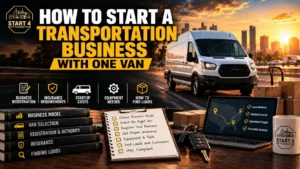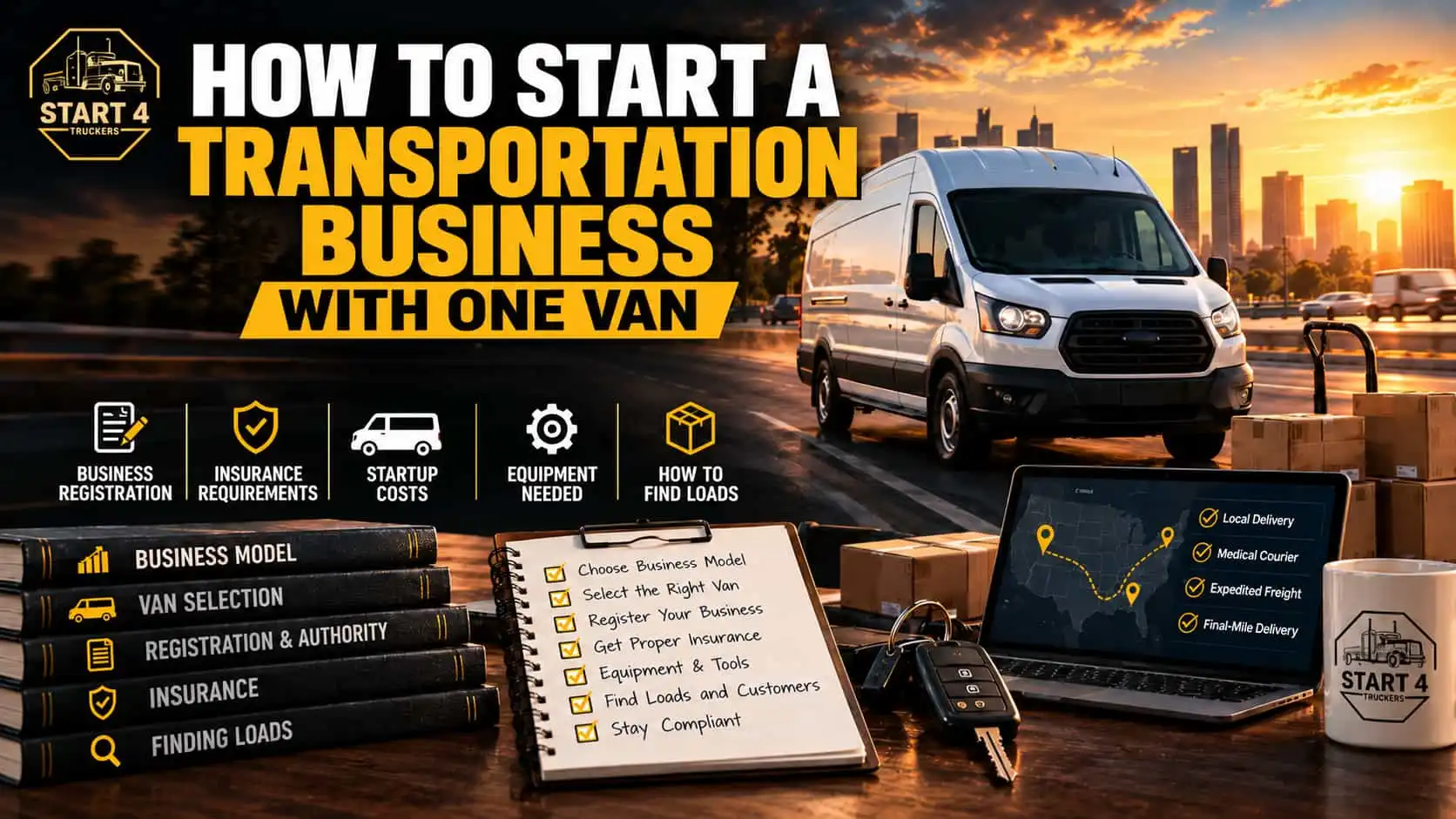
You do not need a fleet of trucks to enter the transportation industry. Many owners begin with one cargo van, build steady customer relationships, and expand only after the first vehicle becomes profitable.
A cargo van usually costs less to purchase, fuel, and maintain than a full-size commercial truck. It can also handle local deliveries, expedited freight, medical courier work, and final-mile transportation.
Most cargo vans can be operated without a Class A or Class B Commercial Driver’s License based on weight alone. That does not mean the business is automatically exempt from federal or state transportation rules.
Your requirements depend on:
- The van’s weight rating and actual operating weight;
- Whether you operate within one state or across state lines;
- Whether the cargo belongs to you or another business;
- Whether you receive compensation for transporting it;
- The type of cargo you carry; and
- Whether you operate under your own authority or another carrier’s authority.
Here is how to set up a one-van transportation business properly.
1. Choose Your Transportation Business Model
Decide what type of work you want before purchasing a van or applying for registrations. Your operating model affects the vehicle, insurance, authority, and equipment you will need.
Local Courier and Delivery Services
A local courier business may transport:
- Legal documents;
- Automotive parts;
- Retail products;
- Office supplies;
- Small commercial orders; and
- Scheduled business deliveries.
Local work can reduce overnight travel and simplify route planning. However, an operation that stays within one state is not automatically considered intrastate commerce. Cargo moving as part of a wider interstate shipment may still fall under interstate commerce rules.
Medical Courier Services
Medical couriers may transport laboratory specimens, medical supplies, records, pharmaceuticals, or equipment.
This work can provide scheduled routes, but it may require specialized training, temperature-control procedures, chain-of-custody documentation, or additional insurance. Requirements depend on the material being transported and the customer’s contract.
Do not advertise medical, pharmaceutical, or hazardous-material transportation until you understand the handling and regulatory requirements.
Expedited Freight
Expedited operators transport urgent shipments such as:
- Replacement parts;
- Manufacturing components;
- Automotive freight;
- Time-sensitive equipment; and
- Missed or emergency deliveries.
Rates vary by route, urgency, freight dimensions, market demand, deadhead mileage, and customer relationships. A high gross rate does not necessarily produce a high profit after fuel, tolls, maintenance, and unpaid miles.
Final-Mile Delivery
Final-mile operators move products from local warehouses or distribution facilities to businesses and consumers.
Deliveries can include furniture, appliances, packaged freight, or retail orders. Larger items may require a helper, lift equipment, or additional insurance.
Operating Under Your Own Authority
Running under your own authority gives you control over customers, rates, and business operations. It also makes you responsible for registration, insurance, compliance, recordkeeping, and authority maintenance.
Leasing On to an Existing Carrier
Another option is to lease your van and services to an established motor carrier.
You may operate under that carrier’s authority, subject to the lease agreement and applicable regulations. Before signing, confirm:
- How compensation is calculated;
- Who provides or pays for insurance;
- Who is responsible for compliance;
- Whether there are dispatch or platform fees;
- How chargebacks and cargo claims are handled;
- Whether you can work with other customers; and
- How either party can end the agreement.
Do not assume that leasing removes every business or compliance responsibility.
2. Select the Right Cargo Van
Choose the vehicle based on the freight you expect to carry, not simply the largest van you can finance.
Common options include:
- Ford Transit;
- Ram ProMaster;
- Mercedes-Benz Sprinter; and
- Similar full-size cargo vans.
Compare the following specifications.
Payload Capacity
Payload is the maximum combined weight of cargo, occupants, equipment, and other items the van can carry.
Available payload is not the same as empty cargo-area capacity. Shelving, straps, dollies, fuel, the driver, and other equipment reduce the remaining payload.
Never accept a load based only on whether it physically fits.
Cargo Dimensions
Measure:
- Usable floor length;
- Interior width;
- Width between wheel wells;
- Interior height;
- Rear-door opening;
- Side-door opening; and
- Loading height.
Many extended cargo vans can accommodate two or more standard 48-by-40-inch pallets, but capacity depends on the exact model, wheelbase, wheel-well spacing, door dimensions, pallet orientation, and freight height.
GVWR and Actual Weight
The Gross Vehicle Weight Rating is the manufacturer’s maximum loaded weight for the vehicle.
Federal regulations may also consider actual vehicle or combination weight. Confirm the applicable GVWR, GVW, GCWR, and GCW before deciding whether a van falls outside a particular requirement.
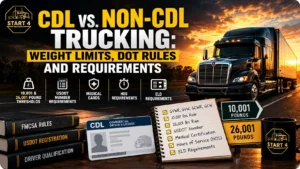
Under 10,001 Pounds
A vehicle at 10,000 pounds or less is generally below the federal weight-based commercial motor vehicle threshold.
However, requirements may still be triggered by:
- Interstate for-hire operating authority;
- Passenger capacity;
- Placardable hazardous materials;
- Actual vehicle or combination weight;
- State-specific USDOT rules; or
- The nature of transportation.
At or Above 10,001 Pounds
A vehicle used in interstate commerce generally enters the federal commercial motor vehicle definition when its applicable GVWR, GVW, GCWR, or GCW is 10,001 pounds or more.
Requirements may then include:
- USDOT registration;
- Driver medical qualification;
- Driver Qualification records;
- Hours of Service compliance;
- Vehicle markings;
- Inspection and maintenance records; and
- Accident and safety recordkeeping.
3. Form the Business and Organize Its Finances
You can operate through different legal structures, but many transportation business owners choose a Limited Liability Company.
An LLC may help separate business operations and finances from personal affairs. It does not replace commercial insurance and may not protect a driver from personal responsibility for their own negligent conduct.
Discuss the appropriate structure with a qualified legal or tax professional.
After forming the business:
- Obtain an Employer Identification Number from the IRS.
- Open a separate business bank account.
- Set up bookkeeping for income and expenses.
- Keep business and personal purchases separate.
- Create a system for invoices, receipts, and tax records.
- Confirm any state or local business-license requirements.
Your Secretary of State records, IRS information, FMCSA application, and insurance documents should use the same legal business name and address. Mismatched information can delay registrations and insurance filings.
Start4Truckers.com can assist with trucking LLC formation.
4. Determine Whether You Need a USDOT Number
A USDOT number is generally required when a company operates a qualifying commercial motor vehicle in interstate commerce.
The federal weight-based requirement normally applies when the vehicle has a GVWR, GVW, GCWR, or GCW of 10,001 pounds or more, whichever applicable value is greater.
USDOT registration may also be required based on:
- Passenger transportation;
- Placardable hazardous materials; or
- State requirements for intrastate commercial vehicles.
Interstate commerce can include more than physically driving across a state line. A trip within one state may still be interstate commerce when the cargo is part of a shipment that began or will end outside that state.
Review the operation carefully before deciding that a one-state route is exempt.
Learn more about USDOT registration for trucking businesses.
5. Determine Whether You Need MC Operating Authority
MC operating authority and a USDOT number are different registrations.
A USDOT number is used for safety identification and monitoring. MC authority allows certain compensated interstate transportation activities.
You will generally need MC operating authority when you transport federally regulated property owned by another party for compensation in interstate commerce.
This requirement can apply even when the cargo van weighs less than 10,001 pounds.
Common operations that may not require interstate operating authority include:
- Private carriers transporting their own property;
- For-hire carriers exclusively transporting exempt commodities; and
- Certain operations conducted exclusively within designated commercial zones.
Because the answer depends on the cargo, customer relationship, and operating territory, confirm your authority requirement before accepting freight.
If authority is required, complete the application through FMCSA’s currently designated registration system. Follow the current instructions on the official FMCSA Registration website, as procedures may change during the MOTUS transition.
Never enter personal or business information into a website simply because it resembles an FMCSA page. Verify that you are using an official .gov website or a service provider you intentionally selected.
Learn more about MC authority registration.
6. File Form BOC-3 When Required
A BOC-3 filing designates agents who can receive legal documents on the carrier’s behalf.
Applicants seeking interstate operating authority generally must have the required process-agent designations on file before their authority can become active.
For a motor carrier, Form BOC-3 must be filed with FMCSA by an authorized process agent. Blanket process-agent companies commonly provide the required designations across multiple states.
Keep only one completed BOC-3 on file, and the carrier should retain a copy at its principal place of business.
Learn more about BOC-3 filing.
7. Purchase the Correct Commercial Insurance
Do not assume that a personal auto policy covers compensated delivery or freight operations.
Personal policies commonly exclude or restrict commercial delivery and for-hire use. Before accepting a load, disclose the intended operation to a licensed insurance professional and obtain coverage written for that business activity.
FMCSA’s minimum financial-responsibility requirements depend on the vehicle, authority, and cargo.
Its current insurance chart lists:
- $300,000 for non-hazardous for-hire property carriers using vehicles below 10,001 pounds; and
- $750,000 for non-hazardous for-hire property carriers using vehicles at or above 10,001 pounds.
Higher federal limits apply to certain hazardous materials and passenger operations.
Although ordinary non-hazardous property carriers do not have a general federal cargo-insurance minimum, brokers, shippers, and customers may contractually require cargo coverage. Many may also require liability limits above the federal minimum.
Ask the insurance provider about:
- Primary auto liability;
- Cargo coverage;
- General liability;
- Physical damage coverage;
- Uninsured or underinsured motorist coverage;
- Occupational accident or workers’ compensation;
- Rental or replacement vehicle coverage; and
- Coverage for the specific cargo and operating territory.
When federal insurance filings are required, the insurance provider submits the appropriate form directly to FMCSA. A certificate emailed to the carrier is not necessarily the same as having the required filing recorded with FMCSA.
8. Complete UCR and Applicable State Registrations
Covered interstate motor carriers generally must register annually under the Unified Carrier Registration program.
Carrier fees are based on fleet size, and the lowest carrier bracket covers fleets with up to two commercial motor vehicles.
Depending on the operation, you may also need:
- State motor-carrier registration;
- Business licenses;
- Intrastate authority;
- Weight or trip permits;
- Sales or use-tax registrations;
- Airport or port credentials; or
- Local courier permits.
Check every state in which the van will operate. Federal registration does not replace applicable state requirements.
9. Prepare for Safety and Recordkeeping Requirements
If the van qualifies as a regulated commercial motor vehicle, the carrier may need to maintain:
- Driver Qualification records;
- Medical qualification documents;
- Hours of Service records;
- Vehicle inspection and maintenance files;
- Annual inspection documentation;
- Accident records;
- Cargo-securement procedures; and
- USDOT number and legal-name markings.
The exact requirements depend on the operation and available exemptions.
Hours of Service
Non-CDL drivers can still be subject to Hours of Service rules.
A qualifying short-haul driver may use time records instead of standard records of duty status, but the driver must satisfy all conditions of the short-haul exception. It is not simply a 150-air-mile exemption.
Electronic Logging Devices
An ELD may be required when:
- The van qualifies as a regulated commercial motor vehicle;
- The driver must prepare records of duty status; and
- No ELD exception applies.
Potential exceptions include qualifying short-haul operations, limited use of paper logs, certain driveaway-towaway operations, and vehicles using qualifying older engines.
Vehicle Markings
A regulated interstate commercial vehicle may need to display the carrier’s legal or qualifying trade name and USDOT number in the required format.
Make sure the name displayed on the van matches the carrier identity associated with the USDOT registration.
10. Purchase Basic Cargo and Safety Equipment
Equipment requirements depend on the freight, but a basic cargo-van setup may include:
- Ratchet straps;
- E-track straps and fittings;
- Moving blankets;
- Load bars;
- Corner protectors;
- Cargo netting;
- Hand truck or dolly;
- First-aid kit;
- Fire extinguisher;
- Reflective warning devices;
- High-visibility vest;
- Flashlight;
- Tire-pressure gauge;
- Basic tool kit; and
- Document storage.
Secure cargo so it cannot shift, fall, leak, or interfere with safe vehicle operation.
Before buying equipment, confirm the van’s available payload. Shelving, ramps, dollies and other permanent equipment reduce the amount of freight you can legally carry.
11. Estimate the Cost of Starting a One-Van Business
Startup costs vary by state, vehicle, driving history, credit profile, insurance market, and operating model.
The following ranges are planning estimates; not guaranteed prices.
| Startup category | Illustrative planning range | What affects the cost |
| Van down payment | $3,500–$7,500 | Vehicle price, credit, term and purchase or lease structure |
| Business formation and registrations | $700–$1,300 | State fees, authority requirements and selected filing assistance |
| Commercial insurance down payment | $1,500–$3,000+ | Location, driving record, vehicle, cargo, coverage and new-authority status |
| Cargo and safety equipment | $400–$1,000 | Freight type, securement needs and equipment quality |
| Initial fuel, toll and maintenance reserve | $2,500–$5,000 | Routes, mileage, van condition and customer payment terms |
| Estimated starting capital | Approximately $8,600–$17,800+ | Does not include every possible expense or the full purchase price of the van |
Obtain current quotes before committing funds. New carriers should also keep enough cash to cover operating expenses while waiting for customers or brokers to pay invoices.
A low startup total is not useful if the business has no reserve for repairs, deductibles, or unpaid miles.
12. Calculate Your Real Operating Cost
Do not accept a load based only on its advertised rate per mile.
Calculate:
- Loaded miles;
- Deadhead miles;
- Fuel;
- Tolls;
- Maintenance reserve;
- Tire reserve;
- Insurance;
- Van payment;
- Dispatch or platform fees;
- Factoring fees;
- Lodging and meals;
- Administrative expenses; and
- Taxes.
For example, a shipment paying well on loaded miles may still lose money if it requires a long unpaid drive to the pickup or leaves the van in an area with no return freight.
Set a minimum acceptable rate based on the complete trip, not only the loaded portion.
13. Find Loads and Customers
A one-van business should avoid relying on a single freight source.
Load Boards
Research load boards that currently support cargo vans, Sprinters, or small expedited vehicles.
Before paying for a subscription, confirm:
- Whether cargo-van loads are active in your area;
- Authority-age requirements;
- Insurance requirements;
- Broker credit information;
- Payment terms;
- Available freight types; and
- Whether the service supports your vehicle class.
Carrier and Expediting Networks
Some transportation companies contract with independent cargo-van operators.
Review each agreement carefully. Confirm compensation, insurance, dispatch fees, cargo claims, settlement schedules, and exclusivity terms.
Direct Local Customers
Potential customers can include:
- Automotive dealerships and parts suppliers;
- Manufacturing businesses;
- Electrical and plumbing suppliers;
- Print shops;
- Laboratories;
- Medical suppliers;
- Event companies;
- Furniture retailers;
- E-commerce businesses; and
- Regional distributors.
Direct relationships can reduce dependence on load boards, but they require consistent service, proof of insurance, clear pricing, and professional invoicing.
Freight Forwarders and 3PLs
Freight forwarders and third-party logistics companies may use cargo vans for urgent, local, and final-mile shipments.
Prepare a carrier onboarding file containing:
- W-9;
- Certificate of insurance;
- Operating-authority details, where applicable;
- USDOT and MC numbers;
- Voided check or payment information;
- Signed carrier agreement; and
- Contact and equipment details.
Verify the company before sharing financial information or accepting a shipment.
14. Protect Your Cash Flow
Transportation businesses often spend money before receiving payment.
Fuel, tolls, and maintenance may be due immediately, while customer invoices may take several weeks to pay.
Protect the business by:
- Checking broker or customer payment history;
- Using written rate confirmations;
- Confirming detention and cancellation terms;
- Submitting paperwork promptly;
- Keeping proof of pickup and delivery;
- Maintaining an emergency reserve; and
- Reviewing factoring fees before assigning invoices.
Do not use every available dollar for the van down payment. A transportation business without working capital can stop operating after one repair or delayed invoice.
Start Your One-Van Transportation Business Properly
A cargo van offers a practical entry into transportation, but the vehicle is only one part of the business.
Before accepting freight, determine whether you need:
- An LLC or another business structure;
- A USDOT number;
- MC operating authority;
- BOC-3 filing;
- UCR registration;
- Commercial insurance;
- State registrations; and
- Driver and vehicle compliance records.
Start4Truckers.com helps new carriers complete their business and federal registration filings based on their planned operation.
View transportation business setup packages or call (210) 588-9348 to discuss your one-van business.
Frequently Asked Questions
Can I start a transportation business with one van?
Yes. A single cargo van can handle local delivery, expedited freight, medical courier work, and final-mile transportation. Your registrations and insurance will depend on the vehicle, cargo, customers, and operating territory.
Do I need a CDL to start a cargo van business?
Most cargo vans do not require a Class A or Class B CDL based on weight alone. A CDL may still be required for certain passenger or placardable hazardous-material operations.
Does a cargo van need a USDOT number?
A USDOT number is generally required when a qualifying vehicle weighing 10,001 pounds or more operates in interstate commerce. Passenger capacity, hazardous materials, and state rules can also trigger USDOT requirements.
Can a cargo van under 10,001 pounds need MC authority?
Yes. MC authority can still be required when a carrier transports federally regulated property owned by others for compensation in interstate commerce. The authority requirement is not limited to vehicles weighing 10,001 pounds or more.
Can I operate under another carrier’s authority?
You may be able to lease on to an authorized carrier. The written agreement should explain insurance, compensation, dispatch, compliance responsibilities, cargo claims, and termination terms.
Can I use personal auto insurance for a cargo van business?
Personal auto policies commonly exclude or restrict commercial delivery and for-hire transportation. Disclose the planned use to a licensed insurance professional and obtain coverage written for the operation.
How much insurance does a cargo van business need?
The required amount depends on the vehicle, cargo, and authority. FMCSA currently lists a $300,000 minimum for qualifying non-hazardous for-hire property carriers using vehicles below 10,001 pounds and $750,000 for vehicles at or above 10,001 pounds. Customers and brokers may require higher limits and cargo coverage.
Does a cargo van driver need a medical card?
A driver generally needs to meet federal medical qualification requirements when operating a commercial motor vehicle weighing 10,001 pounds or more in interstate commerce, unless an exception applies. States may impose additional intrastate requirements.
Does a cargo van driver need an ELD?
An ELD may be required when the van qualifies as a regulated commercial motor vehicle, the driver must prepare duty-status records, and no ELD exception applies. A non-CDL license does not automatically create an ELD exemption.
How many pallets fit inside a cargo van?
Many extended cargo vans can carry two or more standard pallets, but the number depends on the model, wheelbase, doors, wheel wells, pallet orientation, freight height, and available payload. Measure the specific vehicle before accepting palletized freight.
How do cargo van businesses find loads?
Cargo van operators can use load boards, carrier networks, freight forwarders, 3PLs, and direct local customers. Before joining a paid platform, confirm that it has active cargo-van freight in your operating area.