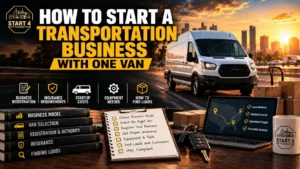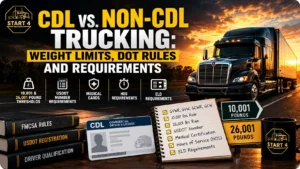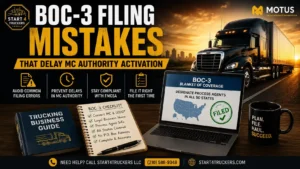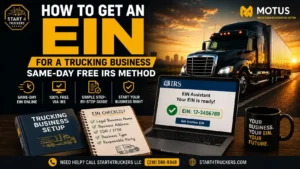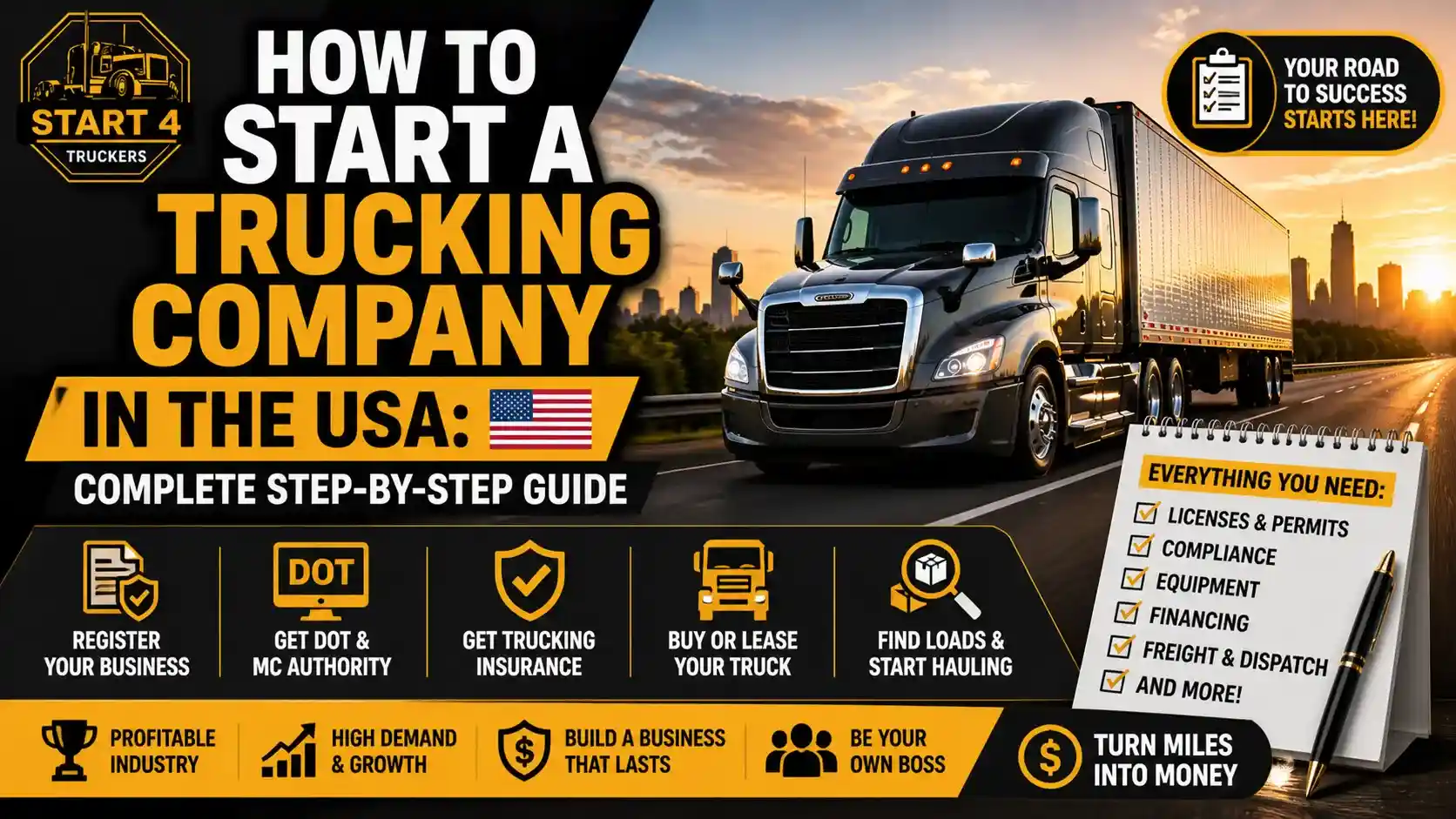
Most trucking companies fail not because of trucks, but because they start without understanding the system. The trucking industry moves America. Around 70% of all freight in the United States is transported by trucks, according to the American Trucking Associations. With over $940 billion in annual revenue, trucking is one of the biggest and most in-demand industries today. If you are searching for how to start a trucking company in the USA, you are entering a market with strong growth and long-term opportunity.
However, starting a trucking business in the USA is not just about buying a truck. You need proper DOT registration, an MC authority from the FMCSA, licenses, permits, insurance, and a clear business plan. Startup costs can range from $10,000 to $100,000+, depending on your setup.
In this blog post, we will explain each step in simple terms so you can start your trucking business with confidence.
What Is a Trucking Company?
A trucking company is a business that transports goods from one place to another using commercial trucks. It sounds simple, but there are actually several types and picking the right one matters a lot when you’re just starting.
Types of trucking businesses include:
-
- Dry van trucking: The most common type; hauling general goods in an enclosed trailer (think groceries, electronics, clothing)
-
- Flatbed trucking: Transporting heavy or oversized loads like steel, lumber, or machinery on an open flatbed trailer
-
- Intermodal trucking: Moving shipping containers between ports, rail yards, and warehouses
-
- Refrigerated (reefer) trucking: Hauling temperature-sensitive goods like food or medicine
-
- Tanker trucking: Transporting liquids or gases
You also need to decide early on whether you want to run as an owner-operator (just you and your truck, doing everything yourself) or build a fleet business where you hire drivers and manage multiple trucks. Both have pros and cons, which we’ll cover later in this guide.
Trucking Company Startup Requirements in the USA
Before you can legally move a single load, there are some must-have requirements you need to check off. Here’s a quick checklist so you know what’s coming:
Startup Requirements Checklist
| Requirement | Description |
| Commercial Driver’s License (CDL) | Required if you plan to drive the truck yourself |
| Business Registration | Register as LLC, Corporation, or Sole Proprietorship |
| Tax id (IRS) | Tax ID number issued by the Internal Revenue Service |
| USDOT Number | Issued by the Department of Transportation for tracking safety |
| MC Number (Motor Carrier Authority) | Required to haul freight across state lines |
| Unified Carrier Registration (UCR) | Annual registration for interstate carriers |
| BOC-3 Filing | Designates a legal process agent in each state |
| Operating Authority | Permission to operate as a trucking company |
| Trucking Insurance | Includes liability, cargo, and physical damage coverage |
| IRP Registration | Required for operating across multiple states |
| IFTA Account | Used for reporting and paying fuel taxes |
| HVUT (Form 2290) | Tax for vehicles over 55,000 lbs |
Step-by-Step Guide How to Start a Trucking Company in the USA
Step 1 – Choose Your Business Structure
The first decision you’ll make is how to legally structure your business. This affects your taxes, your personal liability, and how your company grows over time.
Here’s a simple comparison:
| Business Structure | Liability Protection | Tax Filing | Best For |
| Sole Proprietor | None (personal assets at risk) | Personal tax return | Very small, low-risk operations |
| LLC | Strong (personal assets protected) | Pass-through or corporate | Most new trucking businesses |
| Corporation (S or C Corp) | Strong | Corporate tax return | Larger fleets, investors |
Most trucking startups go with an LLC because it protects your personal assets (like your home and savings) if something goes wrong, and it’s simpler to manage than a corporation. Check out the trucking company LLC formation options to understand exactly what’s involved.
Step 2 – Register Your Trucking Business
Once you’ve picked your structure, it’s time to make it official.
-
- Register your business name with your state’s Secretary of State office
-
- Apply for an Tax id (Employer Identification Number) from the IRS. It’s free and takes about 10 minutes online
-
- Open a dedicated business bank account (keep personal and business finances completely separate)
-
- Get a business address (can be a home address to start)
This step usually takes 2–5 business days.
Step 3 – Get Your DOT Number and MC Authority
This is one of the most important steps. Without these, you can’t legally haul freight across state lines.
-
- USDOT Number: Register at the FMCSA website. It’s free and identifies your company for safety monitoring.
-
- MC Number (Motor Carrier Number): Also applied through FMCSA. This gives you operating authority to transport goods for hire in interstate commerce. The filing fee is $300.
-
- After your MC number is approved, there’s a mandatory 10-day protest period before your authority becomes active.
Step 4 – Get Required Trucking Insurance
No insurance = no business. The FMCSA requires proof of insurance before activating your operating authority. Here’s what you’ll typically need:
-
- Primary liability insurance covers damages you cause to others (minimum $750,000 for general freight; $1,000,000 for hazmat)
-
- Cargo insurance covers the goods you’re hauling if they’re lost or damaged (typically $100,000)
-
- Physical damage insurance covers your truck if it’s in an accident
-
- Non-trucking liability insurance covers you when you’re driving the truck for non-business purposes
Get quotes from multiple commercial truck insurance providers to compare rates. Insurance is typically one of the highest ongoing costs in the trucking business.
Step 5 – Purchase or Lease Your Equipment
You need a truck. Now comes the big question: buy or lease?
| Factor | Buying | Leasing |
| Upfront Cost | High ($15,000–$150,000+) | Low (little to no down payment) |
| Monthly Payment | None (if paid off) | Fixed monthly payment |
| Ownership | You own the asset | The leasing company owns it |
| Maintenance | Your responsibility | Sometimes included |
| Flexibility | Less flexible | More flexible |
| Best for | Experienced operators with capital | New operators with limited cash |
For brand-new owner-operators, leasing is often the smarter move to keep startup costs down. As you grow, you can buy your own trucks.
Step 6 – Hire Drivers or Operate Solo
If you’re driving yourself, make sure your CDL (Commercial Driver’s License) is current and matches the type of vehicle you’re operating (Class A CDL for most semi-trucks).
If you’re hiring drivers:
-
- They must have a valid CDL
-
- Run background checks and motor vehicle records (MVR)
-
- Verify they can pass DOT-required drug and alcohol testing
-
- Set up a drug testing program (required by FMCSA)
Starting solo as an owner-operator keeps things simple while you learn the business. Many successful fleet owners started with just one truck.
Step 7 – Start Finding Loads
Now that you’re set up, you need freight to haul. Here’s how new trucking companies find loads:
-
- Load boards: Online platforms like DAT Load Board and Truckstop.com list thousands of available loads every day. You pay a small monthly subscription fee.
-
- Freight brokers: Brokers connect carriers (you) with shippers who need freight moved. Great for beginners because brokers handle the negotiation.
-
- Direct shipper contracts: As you build your reputation, you can approach companies directly and negotiate contracts. This pays better than load boards over time.
-
- Dispatch services: A dispatcher finds loads for you and handles communication, so you can focus on driving.
Cost to Start a Trucking Company in the USA
Let’s talk real numbers. Here’s a trucking startup cost breakdown so you know what to expect:
| Expense Category | Estimated Cost |
| Truck Purchase (used) | $15,000 – $80,000 |
| Truck Lease (monthly) | $800 – $2,500/month |
| Trailer (if needed) | $5,000 – $40,000 |
| Primary Liability Insurance | $8,000 – $18,000/year |
| Cargo Insurance | $1,000 – $3,000/year |
| FMCSA MC Authority Filing | $300 |
| BOC-3 Filing | $30 – $50 |
| UCR Registration | $59 – $500+ (based on fleet size) |
| IFTA/IRP Registration | $100 – $500 |
| Business Formation (LLC) | $50 – $500 (varies by state) |
| Tax id Registration | Free |
| DOT Number | Free |
| Fuel (first month) | $2,000 – $6,000 |
| Drug Testing Program Setup | $200 – $500 |
| Load Board Subscription | $35 – $150/month |
| Miscellaneous (repairs, tolls) | $1,000 – $3,000 |
| TOTAL ESTIMATED STARTUP | $10,000 – $100,000+ |
Starting with one truck on a lease-to-own or leasing model significantly cuts upfront costs. Many owner-operators launch for under $15,000 if they already have a truck.
Trucking Business Licenses and Permits
Getting your paperwork right is critical. Here’s a breakdown of the key trucking permits and registrations:
-
- USDOT Number: Required for any commercial vehicle over 10,001 lbs operating in interstate commerce. Free to register through FMCSA.
-
- MC Number: Required to haul freight for hire across state lines. Apply at FMCSA.dot.gov. $300 fee.
-
- IRP (International Registration Plan): If your truck travels across multiple states, you need IRP registration through your home state’s DMV. This calculates your registration fees based on miles driven in each state.
-
- IFTA (International Fuel Tax Agreement): Simplifies fuel tax reporting for trucks operating in multiple states. You file quarterly.
-
- HVUT (Heavy Vehicle Use Tax): Required if your truck weighs 55,000 lbs or more. Filed annually with the IRS using Form 2290.
-
- State-specific permits: Some states require additional permits for oversized loads or specific cargo types.
See full trucking compliance services to make sure you’re covered across every requirement.
Trucking Insurance Requirements Explained
Insurance isn’t optional in this industry; it’s the law. Here’s what each type covers:
-
- Primary Liability Insurance: The big one covers bodily injury and property damage caused to others in an accident. FMCSA requires a minimum of $750,000 for general freight carriers. Most insurers recommend $1 million.
-
- Cargo Insurance: Covers the freight you’re hauling. If goods are damaged, stolen, or lost, this pays the claim. Most shippers require at least $100,000 in cargo coverage.
-
- Physical Damage Insurance: Covers your truck and trailer from accidents, theft, fire, and weather damage.
-
- Non-Trucking Liability (NTL): Protects you when using your truck for personal use, not under dispatch.
-
- Bobtail Insurance: Covers you when driving the truck without a trailer attached.
Pro tip: Bundle your coverage where possible. Many commercial truck insurers offer package deals that save you money.
Trucking Business Financing Options
Don’t have $50,000 sitting in the bank? That’s okay. Most trucking startups use financing. Here are your main options:
| Financing Option | Description | Best For |
| SBA Loans (Small Business Administration) | Government-backed loans with low interest rates. The SBA 7(a) loan can provide up to $5 million in funding. | Long-term business funding with lower interest |
| Equipment Financing Loans | Loans specifically for buying trucks and trailers. The truck itself is used as collateral. | Buying new or used commercial trucks |
| Truck Leasing Companies | Lease-to-own programs, where part of your monthly payment goes toward ownership. | Lower upfront cost and flexible entry |
| Factoring Companies | Advance cash on unpaid freight invoices so you don’t wait 30–60 days for payment. | Maintaining steady cash flow |
| Business Credit Cards | Used for smaller expenses like fuel, permits, and tools during startup. | Short-term and small expenses |
Trucking Business Operations Setup
Running a trucking company is more than just driving. Here’s what your day-to-day operations look like:
-
- Dispatch system
-
- ELD (Electronic Logging Device)
-
- Route planning
-
- Load board management
-
- Fleet maintenance tracking
-
- Invoicing and bookkeeping
Solo Owner-Operator vs. Trucking Fleet Business
Which path is right for you? Here’s an honest comparison:
| Factor | Owner-Operator (Solo) | Fleet Business (Multiple Trucks) |
| Startup Cost | $10,000 – $30,000 | $100,000+ |
| Income Potential | $50,000 – $100,000/year net | $200,000 – $1M+/year |
| Risk Level | Medium | High |
| Complexity | Low | High |
| Control | Full | Shared (managing employees) |
| Scalability | Limited | High |
| Best For | Beginners, self-starters | Experienced operators ready to grow |
Most experts recommend starting as an owner-operator, learning the business from the inside, then scaling to a fleet once you understand freight rates, compliance, and cash flow. Starting too big, too fast is one of the most common reasons new trucking companies fail.
Legal Compliance and Regulations (USA Trucking)
Staying legally compliant isn’t optional; violations can shut your business down and cost thousands in fines. Here’s your compliance checklist:
FMCSA Registration: Active MC Number and DOT Number
UCR (Unified Carrier Registration): Annual registration based on fleet size
IFTA Filing: Quarterly fuel tax reporting
IRP Registration: Annual renewal for multi-state operations
HVUT Payment (Form 2290): Annual tax filed with the IRS
ELD Compliance: An electronic logging device is required in every truck
Driver Qualification Files: Must be maintained for all CDL drivers
Drug & Alcohol Testing Program: Required by FMCSA
Annual DOT Vehicle Inspections: Mandatory safety checks
Hours of Service (HOS) Rules: Drivers cannot exceed 11 driving hours per shift
Penalties for non-compliance can include: fines up to $16,000 per violation, out-of-service orders, and loss of operating authority. Don’t skip this part.
Timeline: How Long Does It Take to Start a Trucking Company?
Here’s a realistic week-by-week setup roadmap:
| Week | Milestone |
| Week 1 | Choose a business structure, register an LLC, and get an Tax id |
| Week 2 | Apply for a DOT number and MC authority (FMCSA) |
| Week 2–3 | File BOC-3, UCR registration, and set up insurance |
| Week 3–4 | FMCSA mandatory 10-day protest period |
| Week 4–5 | Get IRP, IFTA, set up ELD, and open a business bank account |
| Week 5–6 | Purchase or lease a truck and trailer, and set up dispatch |
| Week 6–8 | Find your first load and start hauling |
Total timeline: 6 to 8 weeks for a fully legal, operating trucking company if you’re organized and move quickly. Some people complete it in as little as 4 weeks.
Conclusion
Starting a trucking company in the USA is absolutely achievable, even if you’re starting from scratch with no experience. The road to success follows a clear path: choose your business structure, register your company, get your DOT and MC authority, secure proper insurance, find your equipment, and start hauling freight.
Mistakes in the beginning can cost you later, so it’s important to do everything the right way from the start. Start4Truckers LLC helps you handle everything from trucking company setup services to DOT and MC registration, compliance, and more, all in one place.
Ready to get started? Begin your trucking journey today with www.start4truckers.com and build a business that lasts.
Frequently Asked Questions
1. How much does it cost to start a trucking company in the USA?
Startup costs range from $10,000 to $100,000+, depending on whether you lease or buy equipment, your insurance costs, and state-specific fees. A solo owner-operator can often start for $10,000–$20,000 by leasing a truck.
2. Do I need a CDL to start a trucking business?
If you plan to drive yourself, yes, you need a Commercial Driver’s License (CDL). If you are starting as a business owner and hiring drivers, you may not need one. However, many successful trucking entrepreneurs start by driving themselves.
3. Can I start a trucking company with one truck?
Yes, you can. Many successful trucking companies started with one truck. The owner-operator model is one of the easiest ways to enter the industry with lower risk and cost.
4. How do I get a DOT number and an MC number?
You can apply for both through the FMCSA website (fmcsa.dot.gov). The DOT number is free, while the MC authority costs $300. Approval usually takes 3 to 6 weeks.
5. How long does it take to start a trucking company?
It usually takes around 6 to 8 weeks from start to first load. Some steps, like FMCSA approval, have fixed waiting periods.
6. What is the MC number in trucking?
The MC number (Motor Carrier number) is your operating authority from the FMCSA. It allows you to legally transport goods across state lines.
7. Is trucking a profitable business in the USA?
Yes. Owner-operators can earn $50,000 to $100,000+ per year. Profit depends on cost control, fuel management, and keeping your truck loaded.
8. What insurance do I need for a trucking business?
You need primary liability insurance, cargo insurance, and physical damage insurance. Many businesses also add non-trucking liability coverage.
9. How do new trucking companies find loads?
New companies find loads through load boards, freight brokers, dispatch services, and later through direct contracts with shippers.
10. What is the best trucking business model for beginners?
The owner-operator model with a dry van setup is the best starting point. It has a steady demand and requires less specialized equipment.
11. What are the best load boards for truck drivers in the USA?
DAT Load Board and Truckstop.com are the most popular platforms. They help drivers find loads quickly and easily.
12. Do I need a business plan for a trucking company?
Yes. A business plan should include your startup costs, expected income, target routes, and expenses. It is also required if you want financing.