Choosing between being an owner-operator or a company driver is one of the biggest decisions in a trucking career. Both paths offer real opportunities, but they come with very different lifestyles, income levels, and responsibilities. Some drivers want freedom of choice and high earning potential. Others prefer job stability and a steady paycheck without the stress of running a business. Understanding the difference can save you years of frustration and thousands of dollars.
In this blog post, you will know everything in simple, honest terms so you can pick the right path for your goals.
Owner Operator vs Company Driver at a Glance
| Feature | Owner Operator | Company Driver |
| Average Annual Income | $150,000–$250,000 gross | $55,000–$80,000 |
| Net Profit (After Expenses) | $50,000–$100,000+ | $55,000–$80,000 (stable) |
| Startup Costs | $10,000–$30,000+ | $0 |
| Risk Level | High | Low |
| Truck Ownership | Yes (yours or leased) | No (company’s) |
| Schedule Flexibility | High | Low |
| Home Time | Variable | More predictable |
| Benefits (Health, 401k) | Self-funded | Employer-provided |
| Maintenance Responsibility | Driver pays | Company pays |
This table tells a clear story:
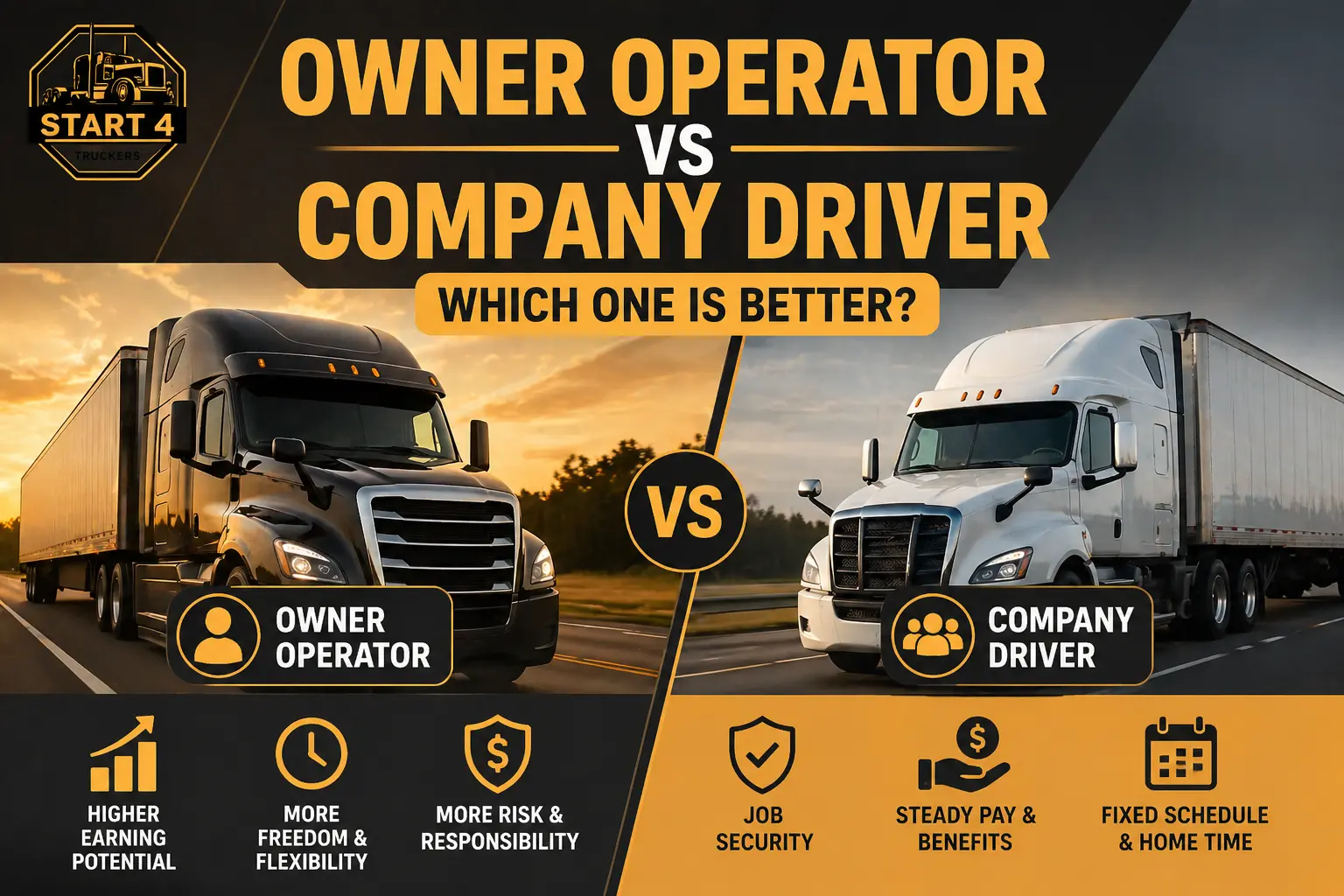
Owner operators earn more but carry higher financial risk and operational costs, while company drivers enjoy job stability, employer-paid maintenance, and predictable home time.
Not sure where to start? Explore our Plans & Pricing and find the right setup for your trucking goals.
What Is an Owner Operator?
An owner-operator is a truck driver who owns or leases their own semi-truck and runs it as a business. Instead of working for a company, they work for themselves. They find their own freight, manage their own operational costs, and handle everything from equipment ownership to taxes.
Think of it like owning a pizza delivery car instead of driving for someone else’s restaurant. You keep more of the money, but you also pay for the gas, repairs, and insurance yourself.
Owner operators deal with:
- Trucking authority (MC number from FMCSA)
- Owner operator insurance (cargo, liability, physical damage)
- Fuel expenses and maintenance cost
- Relationships with freight brokers and shippers
- ELD (Electronic Logging Device) compliance under DOT regulations
Many start through lease-purchase programs, which let drivers lease a truck with the option to own it, though these come with their own risks and fine print worth reading carefully.
Thinking about becoming an owner-operator? Our Trucking Company Setup Services handle the hard parts authority, DOT number, and compliance so you can focus on the road.
How Owner Operators Actually Work
Getting started as an owner-operator takes planning. Here’s a simple step-by-step picture:
- Get your CDL (Commercial Driver’s License): The foundation of any trucking career
- Register your business: Here’s a helpful comparison of LLC or sole proprietor
- Get your USDOT number: Required by the FMCSA for interstate hauling
- Apply for your MC authority: Understand the difference between DOT and MC numbers
- Get insurance: Non-negotiable before hauling a single load
- Find freight: Through load boards like DAT or Truckstop, direct carrier contracts, or freight brokers
Contract obligations and workload flexibility look completely different once you’re running your own truck. You choose when you work and what loads you take but you also eat what you kill. If you want to set yourself up for success from day one, check out our Plans & Pricing and pick the package that fits your goals.
How Much Do Owner Operators Make?
Let’s talk real numbers. According to the FMCSA and industry data, owner operators gross between $150,000 and $250,000 per year. But gross income is not take-home pay.
Typical Annual Expenses for an Owner Operator:
| Expense | Estimated Annual Cost |
| Fuel Cost | $50,000–$70,000 |
| Truck Loan Payments | $20,000–$30,000 |
| Insurance Rates | $10,000–$18,000 |
| Maintenance Cost | $15,000–$25,000 |
| Operating Expenses (permits, tolls, ELD, etc.) | $5,000–$10,000 |
| Total Expenses | $100,000–$153,000 |
So on $200,000 gross, a well-managed owner operator might net $60,000–$100,000 after expenses. That’s solid, but it requires discipline and smart decision-making.
The good news? Owner operators enjoy significant tax deductions for fuel, repairs, depreciation, and even part of your phone bill can reduce your taxable income. The IRS self-employment tax guide is worth bookmarking.
Owner Operator Pros
- Full independence you’re your own boss
- Load selection skip loads that don’t pay well
- High earning potential no income ceiling
- Tax deductions on business expenses
- Schedule flexibility work when you want
- Ability to grow into a fleet and hire other drivers
One real example: Mike, an OTR driver from Texas, spent 5 years as a company driver, saved money, bought his own truck, and now nets $85,000/year while working 3 weeks on, 1 week off. He chooses his own loads and refuses cheap freight. That’s the upside of business ownership done right.
Owner Operator Cons
Let’s be honest, it’s not all freedom and big checks.
- Very high startup cost, easily $15,000–$30,000 out of pocket
- Financial risk, slow freight weeks still mean truck payments
- Business management stress, invoicing, IFTA taxes, compliance
- Maintenance responsibility for a blown engine can cost $20,000+
- Unstable freight rate markets shift, sometimes badly
- Compliance with FMCSA rules requires ongoing attention
Authority setup, compliance requirements, and paperwork aren’t for everyone. Many drivers burn out in year one because they weren’t ready for the business side.
What Is a Company Driver?
A company driver is a professional CDL holder who drives a truck owned by their employer. The company handles the truck, the fuel card, the insurance, and most of the paperwork. The driver just shows up, picks up the load, and delivers it.
It’s the most common entry point into OTR trucking and local trucking jobs. For millions of drivers, it’s also a long-term career choice, not just a stepping stone.
How Company Drivers Work
A typical day for a company driver looks like this:
- The dispatcher assigns a load (the driver has limited say)
- Pre-trip inspection on the company’s truck
- Haul the load, log hours via ELD
- Return or pick up the next load per dispatch
- Weekly paycheck, no invoicing, no broker calls
There’s a certain peace in this structure. The driver lifestyle differences between company and owner-operator life are massive. Company drivers trade income ceiling for job stability, and many are totally fine with that trade.
How Much Do Company Drivers Make?
According to the Bureau of Labor Statistics, heavy truck drivers earn a median of around $54,000–$80,000 per year, depending on the company, experience, and route type.
Company Driver Compensation Package:
| Benefit | Details |
| Pay Per Mile | $0.55–$0.75/mile average |
| Medical Benefits | Often included |
| 401k | Many companies match contributions |
| Paid Time Off | Varies by carrier |
| Sign-On Bonuses | $3,000–$10,000 at some carriers |
Work stability, predictable home time, and zero startup cost make this a very attractive package especially for newer drivers.
Pros of Being a Company Driver
- Zero startup costs, no truck purchase needed
- The company covers maintenance costs and repairs
- Stable paychecks every week
- Medical, dental, and 401k benefits
- Much easier path for beginners
- Less paperwork and compliance requirements
Cons of Being a Company Driver
- Lower earning potential there’s a ceiling
- Less freedom of choice on loads or routes
- Forced dispatch, you haul what they say
- Slip seating sharing a truck with other drivers
- Limited load selection, no cherry-picking freight
- Less say over your schedule or home time
Owner Operator vs Company Driver: Full Side-by-Side Comparison
| Category | Owner Operator | Company Driver |
| Annual Net Income | $50,000–$100,000+ | $54,000–$80,000 |
| Startup Cost | High ($15K–$30K+) | Zero |
| Risk Level | High | Very Low |
| Flexibility | Very High | Low |
| Workload Control | Full | Limited |
| Maintenance Responsibility | Owner pays | Company pays |
| Tax Deductions | Many available | Few |
| Home Time | Variable | More predictable |
| Job Security | Self-dependent | More stable |
| Long-Term Growth | Unlimited (fleet, business) | Limited |
Both paths are legitimate. The right one depends 100% on your personality, financial situation, and goals.
Who Should Become an Owner Operator?
You’re probably a good fit for owner-operator life if:
- You want high earning potential and don’t mind risk
- You’re comfortable with business ownership and bookkeeping
- You want full load selection freedom
- You’ve already got 2–3 years of driving experience
- You have savings or financing in place
If you’re ready to take that step, Start4Truckers LLC helps new owner operators get their authority, DOT number, and business structure set up correctly from day one.
Who Should Stay a Company Driver?
You’re better off as a company driver if:
- You prefer work stability and a predictable income
- You don’t want to manage a business
- You want employer-paid maintenance costs and benefits
- You’re new to trucking and still building experience
- Financial risk makes you uncomfortable
There’s no shame in this choice. Many of the best, most professional drivers in the industry are company drivers and they love it.
Should New Drivers Start as Owner-Operators?
No, not yet!
Starting directly as an owner operator is like opening a restaurant before you’ve ever cooked professionally. Most experts and experienced truckers recommend spending at least 1–2 years as a company driver first. Here’s why:
- You learn real-world freight hauling without financial pressure
- You build discipline and driving habits
- You save money for a down payment on a truck
- You understand DOT regulations before managing your own compliance
Check out this complete guide on how to become an owner-operator truck driver to see the full step-by-step path.
Is Being an Owner Operator Worth It in 2026?
The trucking industry is rebounding in 2026 after a tough freight recession. Diesel fuel prices have stabilized somewhat, and demand for OTR trucking capacity is picking up, especially in refrigerated and flatbed sectors.
Truck financing rates remain elevated, which means truck payments are higher than they were in 2021. Smart owner operators are:
- Buying used trucks with lower payments
- Focusing on high-paying freight rates
- Using fuel cards to cut fuel costs
- Running their operating ratio below 80% to stay profitable
If you’re thinking about starting a trucking company, this guide on how to start a trucking company walks you through everything including the legal and compliance side that trips most people up.
For those already operating, tools like the US DOT number lookup help you stay compliant and verify carrier information quickly.
Conclusion
Both owner-operator and company driver careers offer real value; they just serve different people. If you want stability, low risk, and employer-paid benefits, the company driver path is solid and respectable. If you’re ready for financial risk, business ownership, and the potential to significantly grow your income, becoming an owner-operator can be genuinely life-changing.
The best move? Start as a company driver, learn the industry, save your money, then make the jump when you’re ready. Don’t rush it. When you are ready to make that move, Start4Truckers LLC is here to help you launch your trucking authority, get your DOT and MC numbers, and build your business the right way.
Explore our Trucking Setup Services and take the first real step toward owning your future on the road.
Frequently Asked Questions
1. What is better: owner operator or company driver?
It depends on your goals. Owner-operators earn more but take on more risk and responsibility. Company drivers earn less but enjoy stability and benefits. Neither is universally better.
2. Do owner operators make more money than company drivers?
Gross, yes often significantly more. But after fuel expenses, maintenance costs, insurance rates, and truck loan payments, net income can be similar or only moderately higher.
3. What are the disadvantages of being an owner-operator?
High startup cost, financial risk, business stress, maintenance responsibility, and dealing with compliance requirements are the biggest downsides.
4. How much does it cost to become an owner-operator?
Expect $15,000–$30,000+ minimum for a down payment, owner operator insurance, permits, and authority setup. Ongoing operating expenses add up quickly.
5. Do company drivers get benefits?
Yes most trucking companies offer health insurance, 401k, paid time off, and sometimes sign-on bonuses.
6. Should new truckers become owner-operators right away?
Generally no. Start as a company driver, build experience, save money, then transition. Rushing into business ownership without experience is one of the most common (and expensive) mistakes in trucking.
7. How do owner operators pay themselves?
They pay themselves from net profit after all operational costs are covered. Many use a business bank account and transfer personal income monthly.
8. Do owner operators choose their loads?
Yes, that’s one of the biggest advantages. They can use load boards like DAT, work with freight brokers, or negotiate direct contracts with shippers.