Starting a trucking business is exciting, but one wrong decision at the beginning can cost you far more than you expect. Many new truckers jump into work without thinking about their business structure, and that mistake can lead to serious financial risk later.
When it comes to LLC vs sole proprietor trucking, the difference isn’t just paperwork. It affects your liability, taxes, and how well your business can grow over time.
In this blog post, you’ll learn the key differences in simple terms so you can choose the right structure and protect your future on the road.
LLC vs Sole Proprietor Trucking
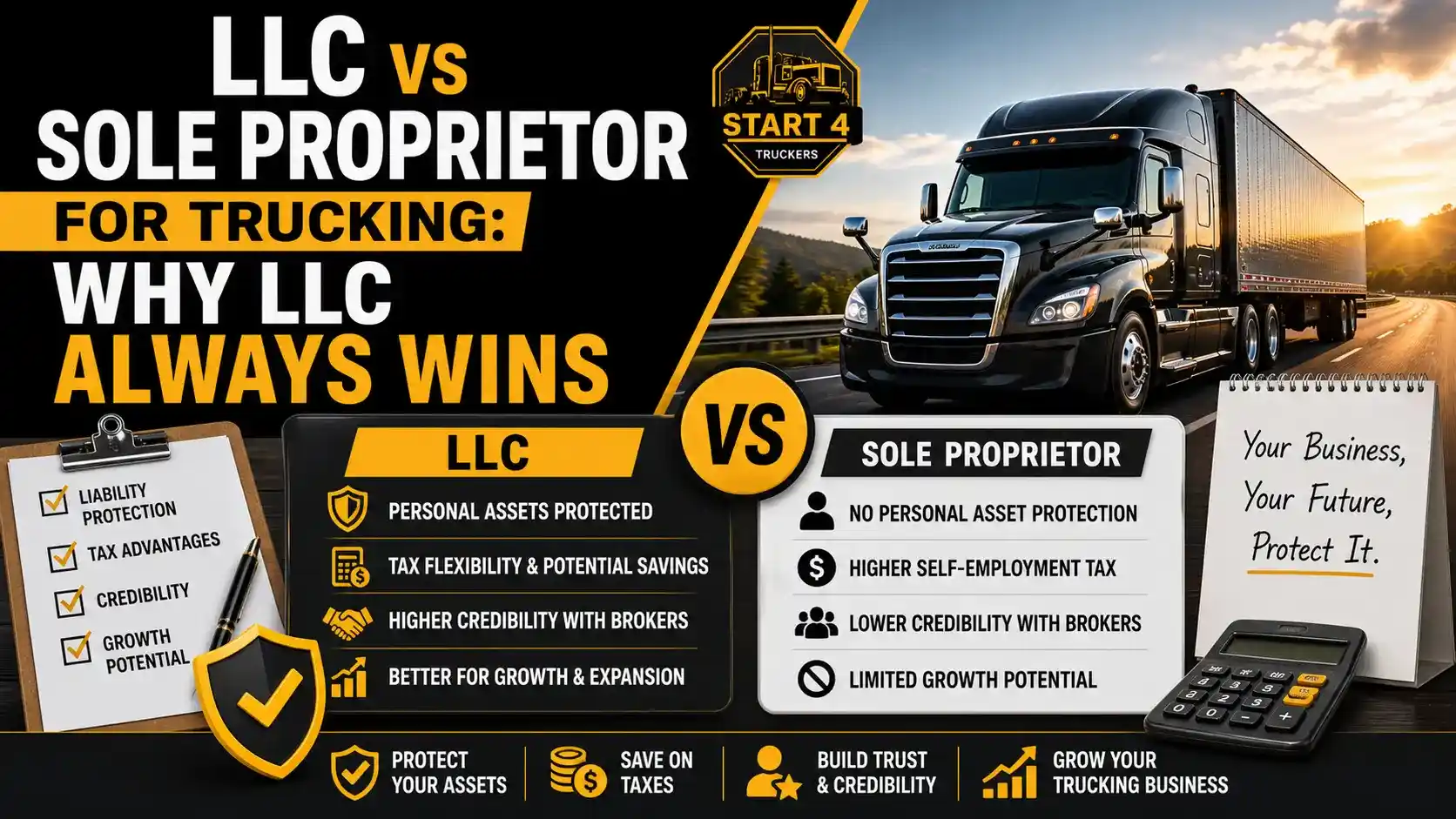
LLC vs sole proprietor trucking: An LLC is better for most truckers because it protects personal assets, reduces liability risk, and offers tax flexibility. A sole proprietorship is easier to start, but it exposes you to full personal risk.
What Is a Sole Proprietor in Trucking?
A sole proprietor trucking business is the most basic setup. When you drive under your own name with no formal business registered, you are automatically a sole proprietor.
You don’t need to fill out forms. You don’t need to pay registration fees. You just start working.
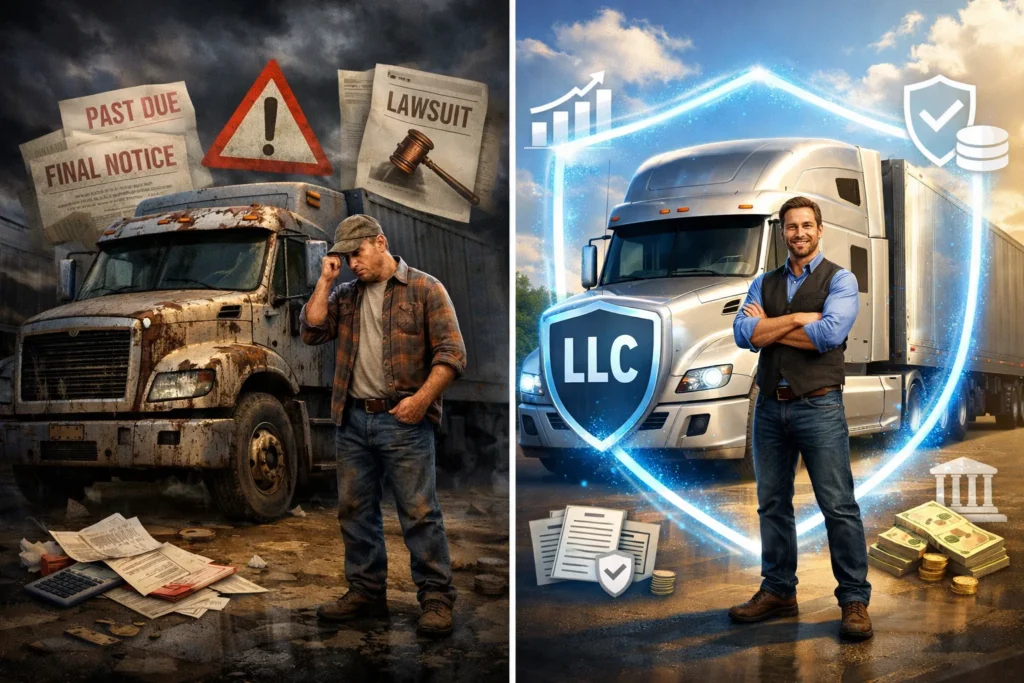
Sounds easy, right? It is at first. But here’s the problem: the law sees you and your business as the same person. That means if your truck causes an accident, someone sues your business, or you owe money to a freight broker, they can come after your personal bank account, your home, your car, everything.
Many new drivers start here because it feels simple. But simple doesn’t always mean safe.
What Is an LLC for Truckers?
An LLC (Limited Liability Company) for owner-operator trucking is a real, registered business. You form it through your state, and it creates a legal wall between you and your business.
Think of it like this: If your trucking business is an LLC and something goes wrong, the lawsuit stays inside the business. Your personal savings, your house, and your family’s money stay protected.
This is called personal asset protection in trucking, and it’s the #1 reason most experienced drivers choose an LLC.
LLC vs Sole Proprietor Trucking: Full Comparison Table
| Factor | LLC | Sole Proprietor |
| Liability Protection | Strong personal assets protected | None, you’re fully exposed |
| Taxes | Flexible can choose S-Corp status | Simple, but full self-employment tax |
| Setup Cost | $50–$800 (state fees) | $0 |
| Setup Difficulty | Moderate | Very easy |
| Broker Credibility | Higher looks more professional | Lower trust |
| Growth Potential | Excellent, easy to scale | Limited |
| Tax id Required | Yes | Optional (can use SSN) |
| Business Bank Account | Recommended/required | Optional |
| DOT/MC Registration | Works with both | Works with both |
As you can see, the LLC wins in almost every category that actually matters when you’re building a real trucking career.
Key Differences Truckers Must Know
Liability Protection for Truckers
This is the big one. In trucking, accidents happen. It’s not always your fault, but when someone’s injured or property is damaged, lawyers go after whoever has money.
Real example: In 2022, a solo owner-operator in Ohio was sued for $1.2 million after a rear-end accident. He was a sole proprietor. He lost his home, his truck, and had to file for bankruptcy. If he had an LLC, his personal home would have been safe.
An LLC creates what lawyers call a “corporate veil,” a legal barrier that stops lawsuits from bleeding into your personal life. This is the #1 reason to form an LLC for owner-operator trucking.
Tax Differences: LLC vs Sole Proprietor Trucking
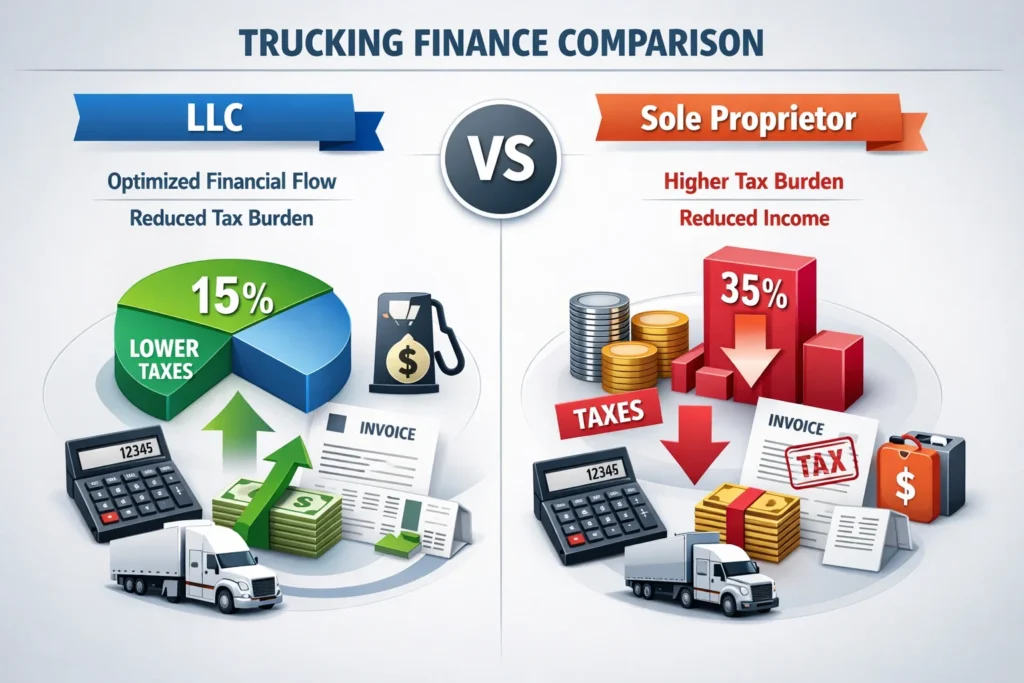
Both structures require you to pay self-employment tax in trucking, which is about 15.3% on top of your income tax. But an LLC gives you an option a sole proprietor doesn’t: electing S-Corp status.
With S-Corp status, you pay yourself a reasonable salary and take the rest as a distribution. You pay self-employment tax only on the salary portion, not the full amount. This can save a trucking LLC owner thousands of dollars every year.
For example:
-
- If you earn $100,000 net as a sole proprietor, you pay self-employment tax on all $100,000.
-
- As an LLC with an S-Corp election, you pay yourself a $60,000 salary + a $40,000 distribution. You only pay self-employment tax on $60,000, saving roughly $6,000+ annually.
That’s real money back in your pocket.
Note: Talk to a licensed CPA before making tax elections. Every situation is different.
Startup Cost and Setup
Sole proprietor: $0. Just start working.
LLC: $50–$500, depending on your state, plus a little paperwork. Some states, like Kentucky, charge as low as $40. Others, such as Massachusetts, charge $500.
One-time cost for a lifetime of protection? That’s a no-brainer.
Credibility with Brokers and Freight Companies
Here’s something new truckers don’t always think about: broker trust.
When you call a freight broker and say “ABC Trucking LLC,” it sounds professional. When you say “just me, John Smith,” brokers sometimes hesitate. They worry about reliability and long-term relationships.
An LLC signals that you’re serious about your trucking business. It helps you win better freight contracts and build stronger relationships with shippers who prefer to work with registered business entities.
Pros and Cons of LLC for Truckers
Pros:
-
- Strong liability protection for truckers
-
- Potential tax savings with S-Corp election
-
- More credibility with brokers and lenders
-
- Easier to open a business bank account
-
- Better foundation for business growth
-
- Separates personal and business finances
Cons:
-
- Small upfront registration cost
-
- Annual state fees in some states
-
- Slightly more paperwork (operating agreement, Tax id, etc.)
-
- Need to keep business and personal finances separate
Pros and Cons of Sole Proprietorship in Trucking
Pros:
-
- Zero cost to start
-
- Simple setup, no paperwork
-
- Easy tax filing (Schedule C)
Cons:
-
- Zero personal asset protection your biggest risk
-
- Full self-employment tax on all income
-
- Lower credibility with brokers
-
- Harder to get business loans or credit
-
- Can’t easily bring in partners or investors
Why Most Truckers Choose an LLC
Ask any experienced owner-operator who’s been in the business for 5+ years, and most will tell you the same thing: they wish they’d formed an LLC from day one.
Here’s why most truckers form an LLC rather than staying as sole proprietors:
1. The accident risk is real. Trucking is one of the most liability-heavy industries in America. One accident without protection can wipe out everything you’ve spent years building.
2. It’s not that expensive. For less than $500, sometimes far less, you can set up an LLC that protects your family’s financial future.
3. It helps you grow. Want to add another truck? Hire a driver? An LLC makes it easier to bring in partners, apply for loans, and expand your trucking company without starting over from scratch.
4. Banks and lenders prefer it. When you apply for truck financing or a line of credit, lenders look more favorably at an established LLC than a sole proprietor.
5. It builds your professional image. In a competitive freight market, looking legit matters.
When a Sole Proprietor Might Still Work
To be fair, there are a few situations where staying a sole proprietor makes sense at least temporarily:
-
- You’re testing the waters. If you’re just doing a few loads to see if trucking is right for you, starting as a sole proprietor while you figure things out is okay temporarily.
-
- Very low income starting. If your earnings are minimal in the first few months, the liability risk is lower. But don’t stay here long.
-
- Leased to a carrier. If you’re leased under a carrier’s authority and insurance, your personal risk is lower (though not zero). Once you go independent, get that LLC.
The keyword in all these cases is temporary. The moment you’re running your own authority, carrying real freight, and earning real money, you need an LLC.
LLC vs Sole Proprietor for Owner-Operators
Owner-operators face a unique challenge. You’re the driver AND the business owner. You’re making decisions about insurance, compliance, and contracts all at once.
As an owner-operator, you’re directly responsible for:
-
- Your truck and equipment
-
- Any cargo damage or loss
-
- Accidents involving third parties
-
- DOT compliance and business structure requirements
A sole proprietor owner-operator has unlimited personal exposure on all of these. An LLC owner-operator has a shield.
For example, if a freight broker claims you damaged cargo worth $80,000 and sues your business, as an LLC, they sue the business. Your personal truck (owned separately), savings account, and home stay are protected.
Check out Start4Truckers ‘ trucking compliance services to understand what else you need to keep your business legally protected.
How to Start an LLC for Trucking (Step-by-Step)
Ready to make the move? Here’s how to set up your trucking business LLC from scratch:
Step 1: Choose Your Business Name
Pick a name that’s unique in your state and ends in “LLC.” Example: “Blue Ridge Freight LLC.” Check your state’s business registry to make sure it’s available.
Step 2: Register Your LLC
File Articles of Organization with your state’s Secretary of State office. Most states allow online filing. Fees range from $50–$800. If you want help with setup, you can contact Start4Truckers for quick assistance.
Step 3: Get Your Tax id
An Tax id (Employer Identification Number) is like a Social Security number for your business. Apply free at IRS.gov. You need this to open a business bank account and file taxes.
Step 4: Open a Business Bank Account
This is critical. Never mix personal and business money. A separate account makes bookkeeping easier and keeps your LLC protection solid.
Step 5: Apply for DOT/MC Number
Your USDOT number and MC authority are required to operate as a for-hire carrier. You can get help with DOT/MC registration to make sure it’s done right.
Step 6: Set Up Your Trucking Insurance
Trucking insurance requirements for most carriers include:
-
- Primary liability (minimum $750,000 for general freight)
-
- Cargo insurance
- Physical damage coverage
Step 7: Stay Compliant
Keep your LLC in good standing by filing annual reports, paying state fees, and maintaining your business bank account. Trucking compliance isn’t just about DOT; it’s about keeping your whole business legally clean. If you need help, Start4Truckers can assist you with setup and compliance support.
Common Mistakes Truckers Make
Even truckers who form an LLC sometimes make these costly errors:
-
- Mixing personal and business money. If you use your business account for personal groceries or your personal card for truck repairs, you could lose your LLC protection. Courts call this “piercing the corporate veil.”
-
- Skipping the operating agreement. This document explains how your LLC is run. Even if you’re a single-member LLC, have one.
-
- Ignoring annual filings. Most states require you to file and pay an annual fee to keep your LLC active. Miss it, and your LLC could be dissolved.
-
- Wrong structure for wrong reasons. Some truckers form an LLC just to “look professional,” but never separate their finances. The structure only protects you if you maintain it properly.
-
- Not getting proper insurance. An LLC doesn’t replace insurance; it works alongside it.
Final Verdict:
For the vast majority of truckers, especially owner-operators running their own authority, an LLC is the clear winner.
Here’s the short version:
-
- Sole proprietor = simple, cheap, dangerous
-
- LLC = small upfront cost, big long-term protection
The best business structure for truck drivers who are serious about building a real career, protecting their family, and growing their business is the LLC. Full stop.
The cost of forming one is a fraction of what you could lose in a single lawsuit. And the peace of mind? That’s priceless.
If you’re ready to set up your trucking LLC the right way, from registration to DOT authority to compliance. Start4Truckers LLC makes the whole process simple. Check out the Trucking Company Setup Services,(Plans and Pricing) to get started today. Don’t wait until something goes wrong; protect yourself now.
Frequently Asked Questions
1. Is an LLC Better Than a Sole Proprietor for Trucking?
Yes. An LLC protects your personal assets, offers better tax options, and gives you more credibility with brokers and lenders. For most truckers, it’s the smarter choice.
2. Do Owner-Operators Need an LLC?
Legally, no, but practically, yes. Without an LLC, your personal assets are at risk every time your truck hits the road. One serious accident or lawsuit as a sole proprietor can create serious financial problems.
3. Can I Run a Trucking Business as a Sole Proprietor?
You can, but it’s risky. You’ll have zero liability protection, pay higher effective taxes, and face challenges building business credit. Most experienced drivers recommend forming an LLC early.
4. What Are the Tax Benefits of an LLC for Truck Drivers?
An LLC can elect S-Corp tax status, allowing you to split income between salary and distributions. This reduces self-employment tax and can save thousands each year.
5. How Much Does It Cost to Start an LLC for Trucking?
State filing fees range from $40 to $500. Total startup costs, including an Tax id and business setup, usually fall between $100 and $800.
6. Can I Switch from Sole Proprietor to LLC in Trucking?
Yes. You can form an LLC anytime. You’ll need to update your DOT/MC records, insurance, and bank accounts to reflect the new business structure.
7. Is an LLC Required for DOT Registration?
No. DOT registration accepts both structures. However, starting as an LLC is recommended to set up your business correctly from the beginning.
8. Does an LLC Protect Truck Drivers From Liability?
Yes, if maintained properly. Keep business and personal finances separate, file required reports, and ensure your insurance is under the LLC name.